Carpet Care for Finished Lower Levels
Basement Carpet Cleaning in Hammond
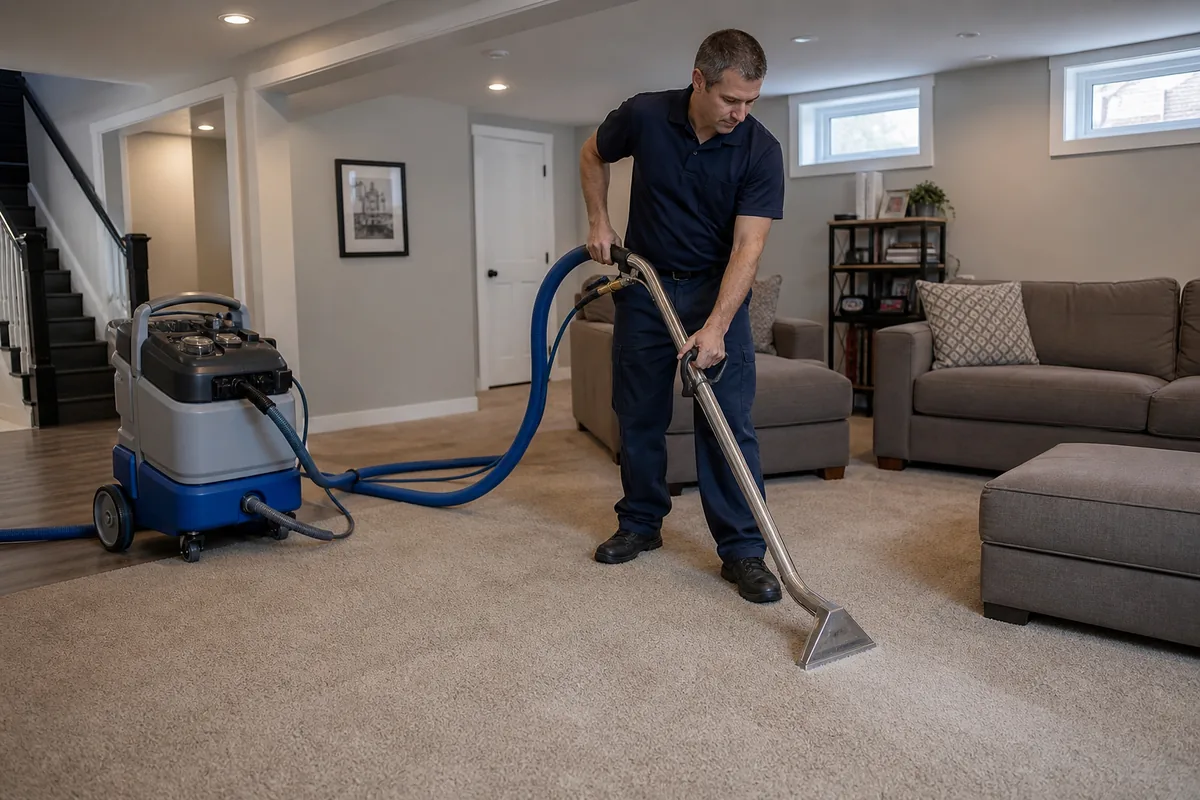
Looking for basement carpet cleaning in hammond in Hammond or Northwest Indiana? Tell us what you need cleaned. Call us or fill out the form, and we will contact you to discuss the job and provide a quote.
Serving Hammond and Northwest Indiana homes, apartments, condos, and workplaces.
Get a quote
Get a carpet cleaning quote in Hammond
Choose a service and your city, then send your contact information. We will contact you to discuss the job and provide a quote.
Quote request received
Quick details
What to tell us
Tell us which rooms, furniture, rugs, or floors need service.
Point out spots, odors, heavy traffic, pet concerns, or past cleaning products.
Share your Northwest Indiana city, ZIP code, stairs, parking, and entry details.
Review Moisture History Before Cleaning
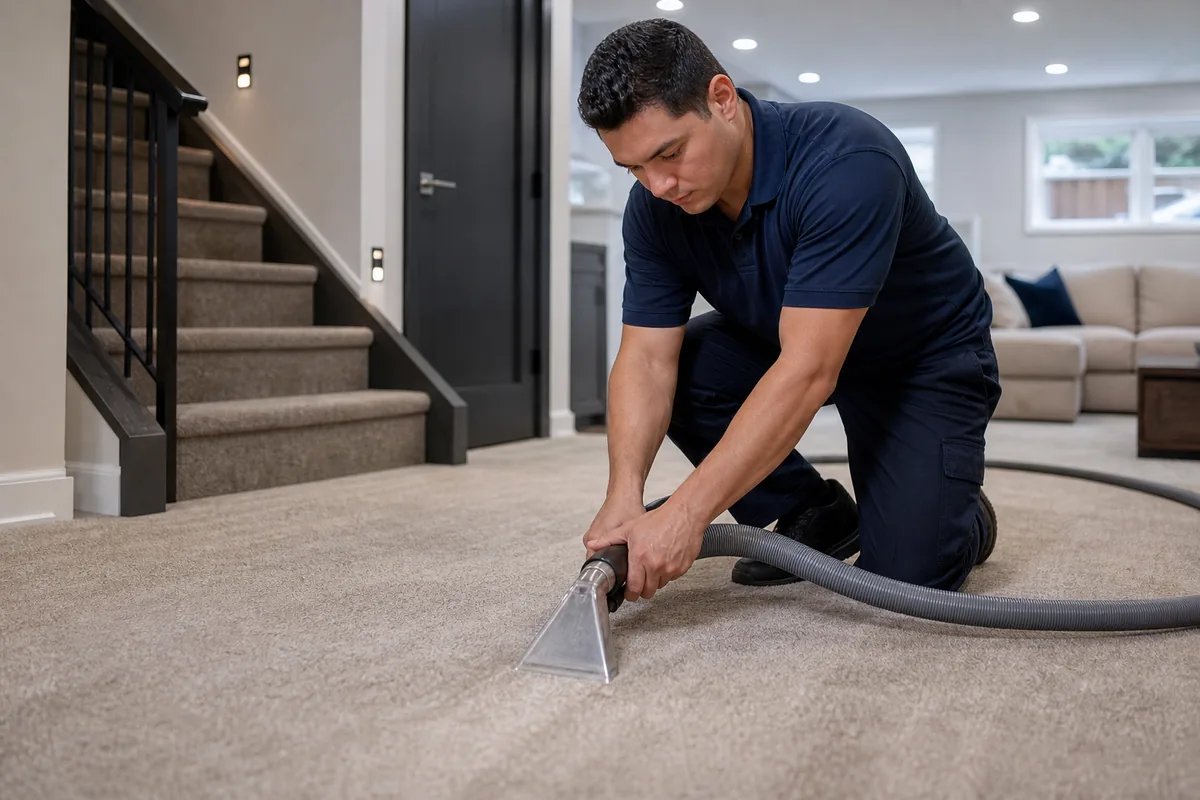
Ask when the basement last experienced seepage, plumbing leaks, drain backup, appliance failure, condensation, or persistent dampness. Staining at walls, loose seams, ripples, odor changes, and damaged baseboards may provide context, but appearance alone does not establish the source. Active moisture and sewage-related conditions require appropriate building or restoration work before ordinary appearance cleaning. We define accessible dry carpet and note excluded areas rather than adding moisture where an unresolved condition exists. A dry-looking surface can still have affected pad or materials below, so previous repairs and replacement history are useful parts of the conversation.
Track Soil From Stairs and Exterior Doors
Basement entries often concentrate grit, soil, deicer, and debris along stairs, walkout doors, laundry routes, and utility paths. Deliberate dry removal is important at stair corners, mat edges, baseboards, and transitions before moisture-based treatment. We compare traffic lanes with protected carpet to distinguish buildup from permanent abrasion. Darkened stair nosings or doorway turns may remain different after cleaning because fibers are worn. Exterior mats, maintained stair runners, and regular vacuuming can reduce future migration, but saturated mats or unfinished entry conditions can continue feeding soil into the room. Cleaning addresses the carpet, not the exterior source.
Get a quote for this service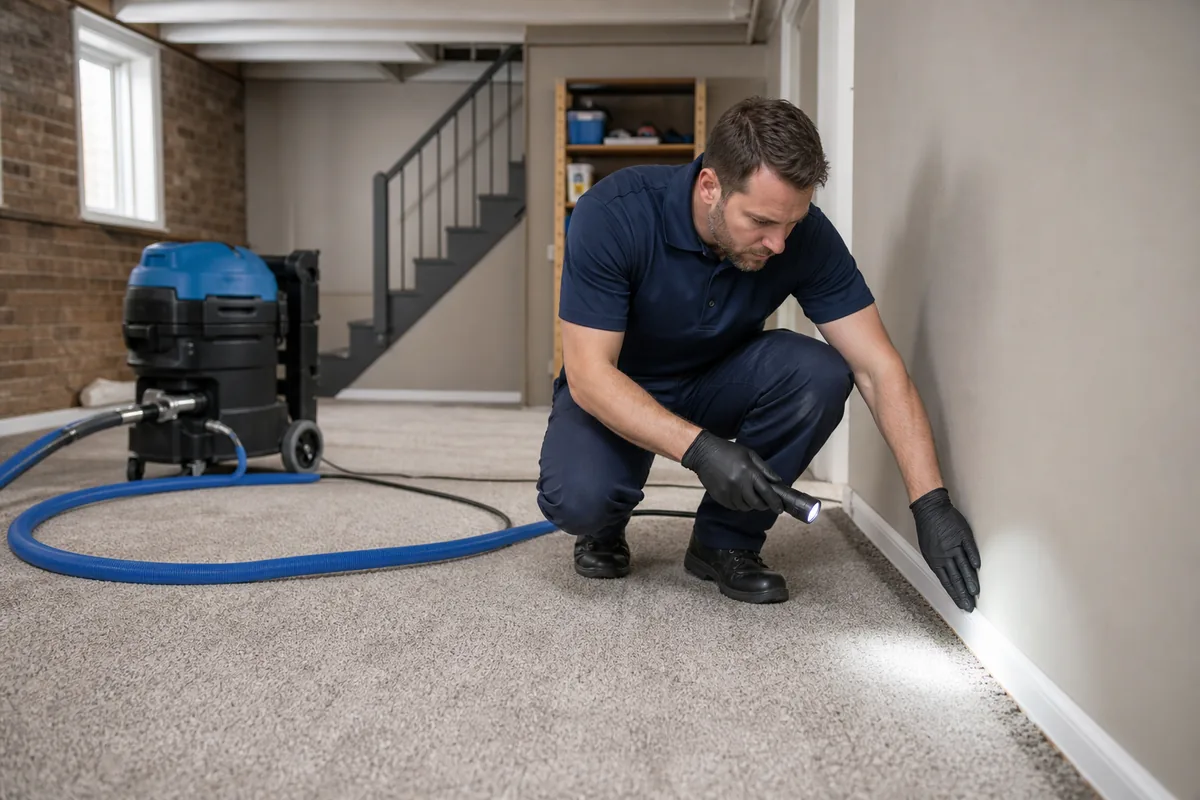
Plan Around Storage and Low Furniture
Boxes, shelving, exercise equipment, toys, and low furniture can leave little open floor. Residents should clear loose belongings and confirm which large items remain. Cardboard and stored textiles should not be placed onto damp carpet, and heavy equipment is not ordinary movable furniture. The work may cover open zones and accessible edges when a full-room clearance is impractical. We also note rust transfer, furniture dye, compressed pile, and blocked areas. A defined staging plan prevents belongings from shifting repeatedly across cleaned carpet and avoids trapping moisture beneath storage when the room is reset.
Evaluate Spots and Odors by Source
Basement carpet can hold beverage spills, pet incidents, workshop residue, laundry products, plant moisture, and unknown marks from stored items. These require different testing and realistic limits. Odor may originate in carpet or pad, but it may also come from drains, foundation moisture, walls, stored materials, appliances, or another building condition. Fragrance does not identify or remove the source. We treat only suitable accessible carpet and document concerns that need another trade. Dye change, rust, paint, adhesive, backing damage, and contamination beneath the carpet may remain after surface soil is removed.
Improve Airflow Without Making Fixed Drying Promises
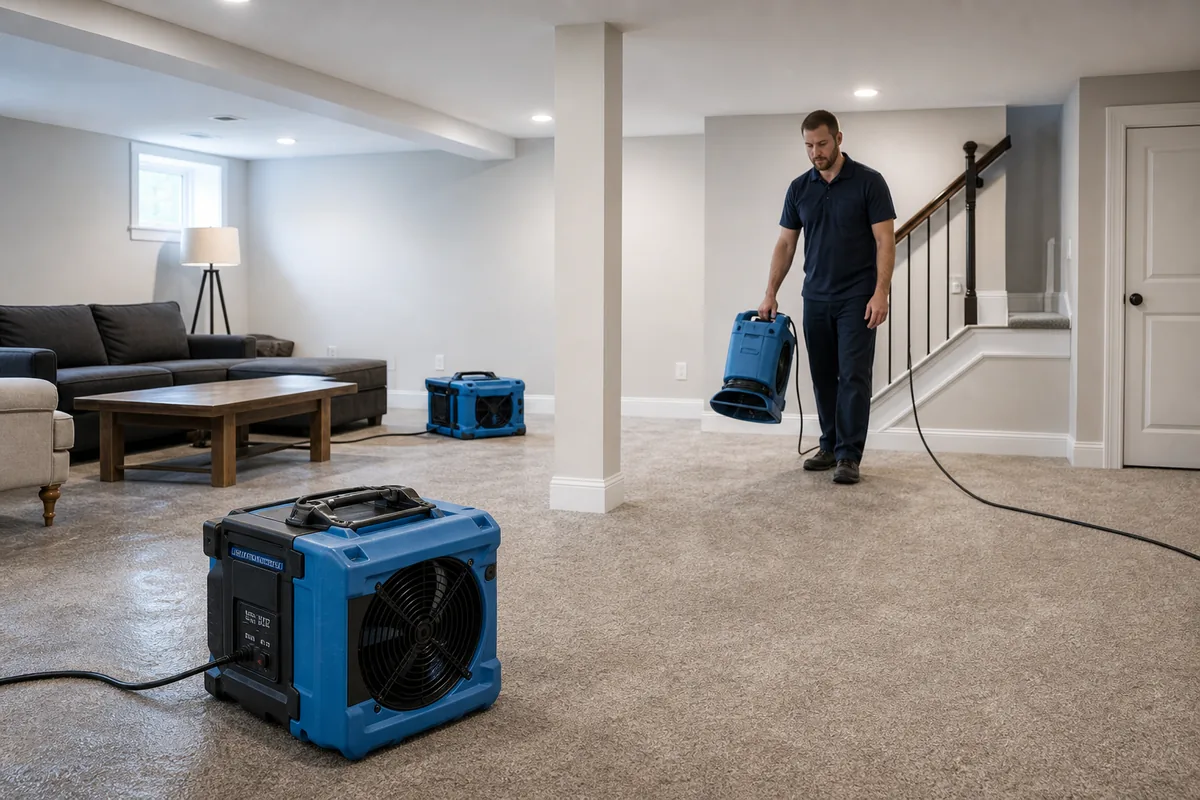
Lower levels often have cooler surfaces and less natural air movement than upper floors. Drying depends on humidity, temperature, ventilation, carpet and pad construction, concrete conditions, and treatment intensity. Existing dehumidification or HVAC may help when operated appropriately, but equipment use should follow building and manufacturer guidance. Keep foot traffic, pets, boxes, rugs, and furniture off cleaned areas until ready. Review the carpet after drying and watch for recurring dampness or odor. If a condition returns with weather or plumbing events, further source investigation is more useful than repeated surface cleaning. Record when and where it returns.
Questions before you schedule
Common questions
Only after the likely source and current moisture condition are considered. Cleaning cannot resolve active seepage, affected building materials, or contamination below access.
Clear loose items and create equipment access. Cardboard, textiles, and storage should not contact damp carpet, while heavy shelving needs an agreed work.
Drying can differ with construction, pad, humidity, ventilation, temperature, treatment, and slab conditions. The observed room matters more than a universal estimate.
It may remove accessible soil, but abrasion, crushed pile, filtration-like edge buildup, dye change, and damaged fibers can leave visible differences. Compare the dried carpet from both directions before judging the remaining contrast.
Ready for a quote?
Tell us what you need cleaned.
Call us or fill out the form. We will contact you to discuss the job, answer your questions, and provide a quote.
Get My Quote