After the Dust Settles
Post-Renovation Carpet Cleaning in Hammond
Looking for carpet cleaning after remodeling and repair work in Hammond or Northwest Indiana? Tell us what you need cleaned. Call us or fill out the form, and we will contact you to discuss the job and provide a quote.
Serving Hammond and Northwest Indiana homes, apartments, condos, and workplaces.
Get a quote
Get a carpet cleaning quote in Hammond
Choose a service and your city, then send your contact information. We will contact you to discuss the job and provide a quote.
Quote request received
Quick details
What to tell us
Tell us which rooms, furniture, rugs, or floors need service.
Point out spots, odors, heavy traffic, pet concerns, or past cleaning products.
Share your Northwest Indiana city, ZIP code, stairs, parking, and entry details.

Wait Until Dust-Producing Work Is Actually Finished
Cleaning too early allows sanding, drywall work, demolition, or unsealed construction areas to cover the carpet again. Before scheduling, confirm that cutting and sanding are complete, debris has been removed, ventilation work is finished, and contractors no longer need to cross the carpet with tools. Protective films should be removed carefully because adhesive or trapped moisture can affect the surface below. If another trade must return, identify its route and protect only fully dry carpet with materials suitable for the flooring. The goal is not merely to fit cleaning into the calendar; it is to prevent fresh dust from undoing the work immediately afterward.
Begin With Dry Soil Removal
Renovation dust should not automatically be turned into wet slurry. A deliberate dry-removal stage helps collect loose particles from open areas, edges, transitions, stair corners, and places where air movement deposited fine material. The correct equipment and technique depend on the carpet and the type of residue present. Heavy debris, screws, wood splinters, and sharp fragments should be collected before routine vacuuming. We also inspect nearby upholstery and rugs because settled dust rarely respects room boundaries. Once loose material is reduced, the cleaner can judge whether extraction or targeted spotting is appropriate for the remaining bonded soil.
Get a quote for this service
Identify Paint, Compound, Adhesive, and Unknown Residues
Not every construction mark should receive the same product. Water-based paint, cured coating, joint compound, adhesive, caulk, wood stain, and unknown solvent residue behave differently and may already have changed the carpet's color or texture. Scraping or aggressive household solvents can spread a mark or affect backing and dyes. We record where each residue appears, ask what materials contractors used when that information is available, and test a limited area before expanding treatment. Some spots may improve but remain visible. Others may be better referred to a flooring repair specialist when the risk of further damage outweighs the likely cleaning benefit.
Inspect Edges, Air Paths, and Adjacent Rooms
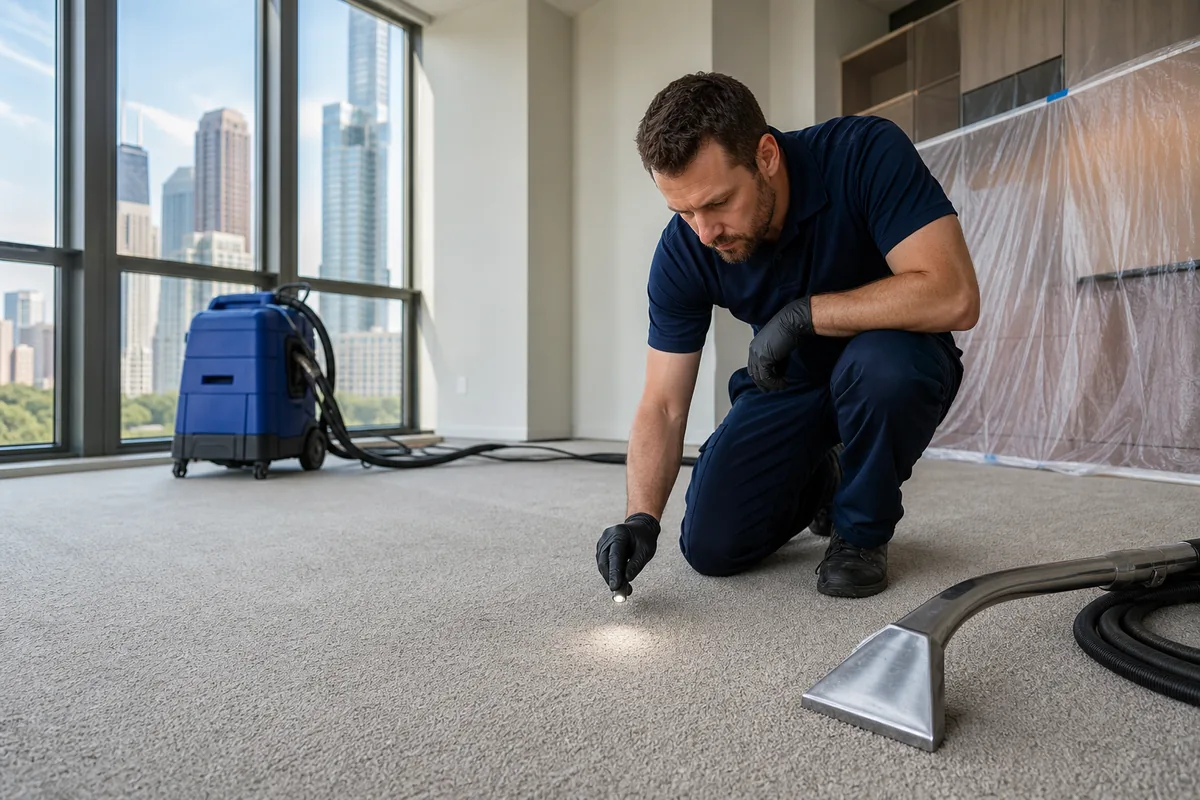
Fine dust often gathers where moving air slows down: around baseboards, beneath closed doors, beside floor registers, and along the edges of temporary barriers. It may also migrate into a hallway, stairwell, upholstered chair, or room that was never part of the renovation. A useful inspection follows likely air and foot-traffic paths rather than stopping at the remodeled doorway. In older Northwest Indiana homes, uneven transitions and radiator covers can create additional collection points. We include only accessible surfaces in the agreed work and note areas blocked by built-ins, heavy furnishings, or unfinished work so the homeowner understands what was and was not addressed.
Protect the Finished Work Without Trapping Moisture
Once cleaning is complete, drying conditions matter. Newly painted walls, refinished wood, cabinetry, and trim should be protected from contact, yet covering damp carpet with impermeable sheets can slow drying. Plan a clear exit route, keep other trades away until the carpet is ready, and use airflow appropriate to the room and building. Drying time varies with humidity, temperature, pile, ventilation, and treatment intensity. After drying, inspect under normal light and vacuum again if the cleaner recommends it. A small amount of later settling may reflect dust remaining in inaccessible building cavities rather than a failure of the carpet-cleaning process.
Questions before you schedule
Common questions
Schedule after dusty work and debris removal are complete. Paint and finishes should have reached the stage specified by their installers, and other trades should no longer need regular carpet access.
Dry soil removal followed by suitable cleaning may remove substantial accessible dust. Material that has migrated beneath flooring, into ducts, or behind fixed construction is outside ordinary carpet cleaning.
Results depend on paint type, age, prior treatment, carpet fiber, and whether the dye or pile has changed. Some marks improve; complete removal cannot be assumed.
Follow the film manufacturer's removal directions and inspect for adhesive or moisture. Leaving film too long or removing it abruptly can create a separate issue for the flooring.
Ready for a quote?
Tell us what you need cleaned.
Call us or fill out the form. We will contact you to discuss the job, answer your questions, and provide a quote.
Get My Quote