Dining Seating Care
Dining Chair Upholstery Cleaning in Hammond
Looking for cleaning upholstered dining chairs seat by seat in Hammond or Northwest Indiana? Tell us what you need cleaned. Call us or fill out the form, and we will contact you to discuss the job and provide a quote.
Serving Hammond and Northwest Indiana homes, apartments, condos, and workplaces.
Get a quote
Get a upholstery cleaning quote in Hammond
Choose a service and your city, then send your contact information. We will contact you to discuss the job and provide a quote.
Quote request received
Quick details
What to tell us
Tell us which rooms, furniture, rugs, or floors need service.
Point out spots, odors, heavy traffic, pet concerns, or past cleaning products.
Share your Northwest Indiana city, ZIP code, stairs, parking, and entry details.
Compare Every Chair in the Set
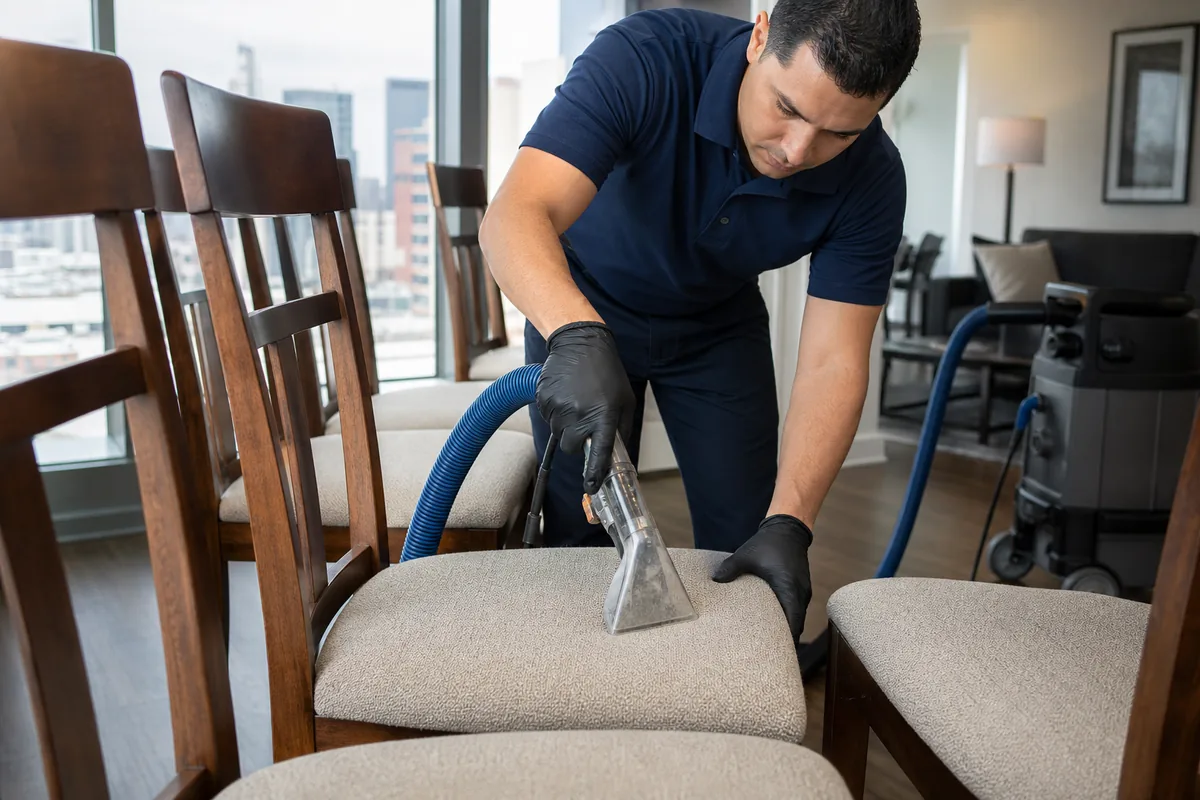
A useful inspection lines up the chairs and compares seats, backs, edges, piping, and frames under similar light. This reveals which differences are soil and which may be fading, abrasion, replaced fabric, or previous treatment. We note care labels and test discreetly because chairs purchased as a set can still have repaired seats or fabric from different dye lots. Matching the process does not guarantee perfectly matching results when starting conditions differ. By documenting the set first, the cleaner can apply consistent steps while giving additional attention to higher-use chairs and avoiding unnecessary treatment of decorative panels that are already fragile.
Remove Crumbs and Dry Debris Before Spotting
Food particles gather where fabric wraps beneath the seat, along piping, in button tufts, and between the upholstered pad and frame. Controlled vacuuming and gentle detailing remove loose material before it becomes wet residue. Chairs with removable seat pads are handled according to their construction; ordinary cleaning does not assume the pad should be unscrewed or dismantled. Sharp fragments and hardened food should be lifted without cutting the textile. Once dry material is reduced, spots can be evaluated individually. This sequence keeps the process focused and reduces the temptation to flood an entire seat because of a few concentrated crumbs or marks.
Get a quote for this service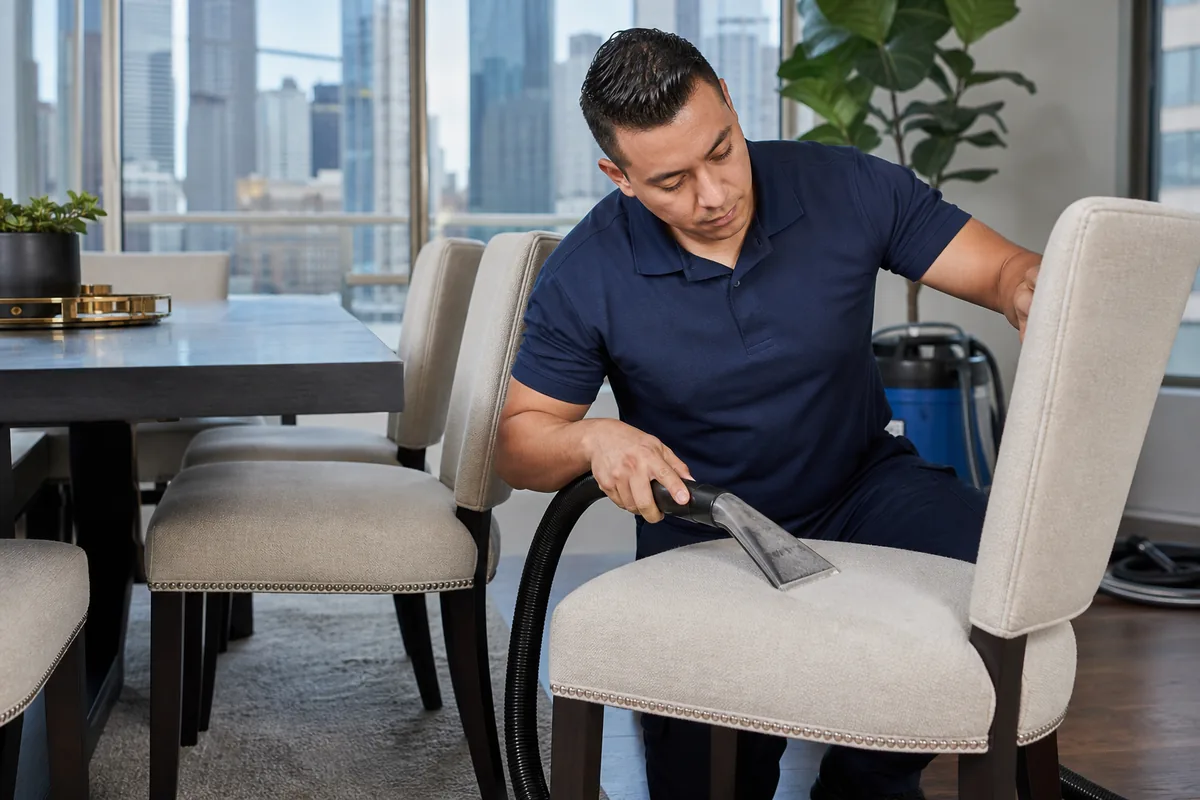
Treat Food and Drink Spots With Context
Coffee, wine, sauce, dairy, oil, and unknown older spills contain different components. Heat, age, household products, and rubbing can change the stain before a cleaner sees it. We ask what happened when that information is available and test the chosen approach on the actual fabric. A visible ring may include both residue and a change in dye or texture. Repeated controlled treatment may improve it, but complete removal should not be assumed. The surrounding seat is cleaned evenly so a spot does not become a cleaner-looking island. Delicate trim or contrasting threads may require a more limited approach.
Protect Wood, Metal, Cane, and Decorative Finishes
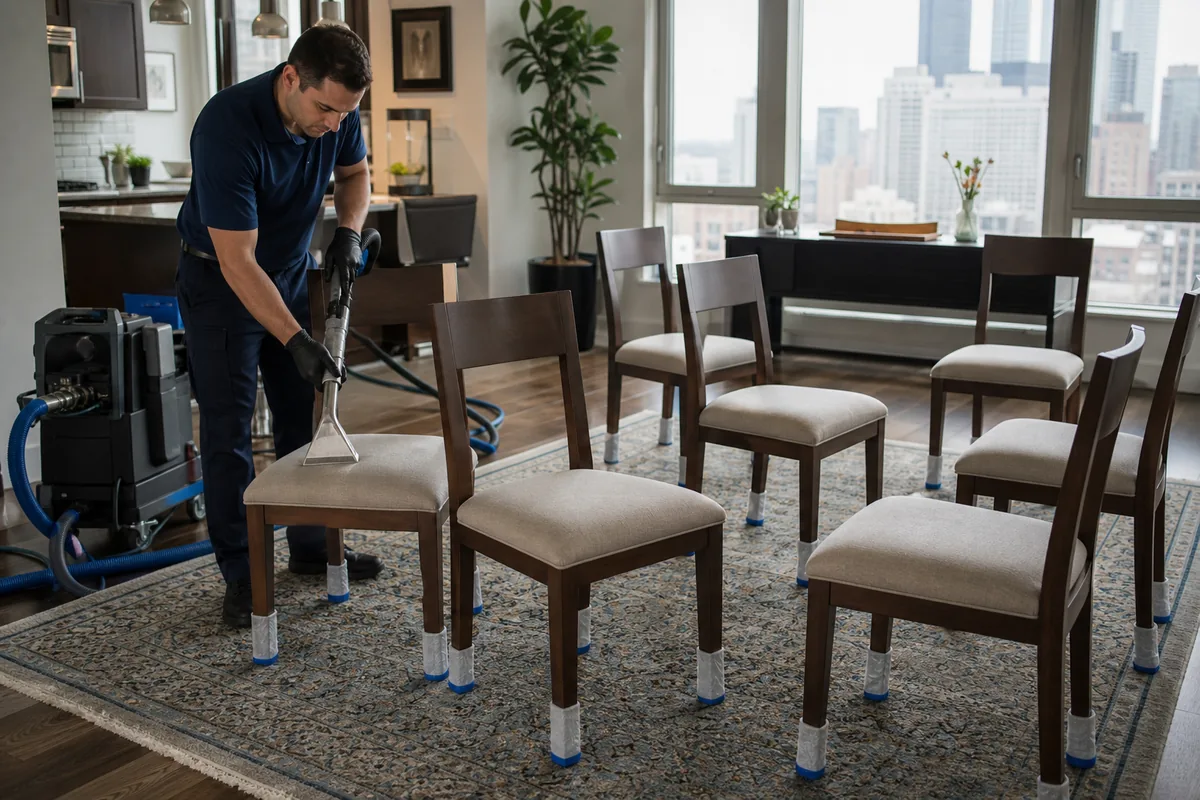
Dining-chair upholstery often sits directly beside stained wood, painted frames, brass-colored nails, metal legs, or woven cane. These surfaces may react differently to moisture and spotting products. The technician identifies loose joints, flaking finish, rust, unstable decorative elements, and exposed staples before work begins. Upholstery cleaning does not include furniture refinishing or structural repair. Chairs should stand on a suitable surface during cleaning and drying so moisture or furniture finish does not transfer to floors. In a compact Hammond dining room, clearing the table area gives enough room to position the full set without stacking damp chairs together.
Dry the Set Without Rushing It Back Into Service
Seat padding can retain moisture after the surface begins to feel dry. Fabric, fill, humidity, airflow, and the amount of spot treatment all affect timing. Chairs should remain separated in a ventilated area rather than pushed tightly under the table or stacked. Keep meals, clothing, and fitted covers away until the upholstery is ready. If a texture has a visible direction, final grooming may be recommended after drying. Review the set in consistent lighting, remembering that permanent fading or wear may still vary from chair to chair. A routine of prompt blotting and crumb removal can reduce the need for aggressive spot products between services.
Questions before you schedule
Common questions
Not necessarily, but treating the set together makes it easier to compare conditions and apply a consistent process. Starting differences may still produce different final appearances.
Many improve, but age, fiber, dye stability, heat, and earlier products affect the outcome. Inspection and testing are needed before setting expectations.
The upholstery process protects and wipes incidental contact from frames, but wood refinishing, polishing, joint repair, and restoration are separate services.
Return them after the fabric and padding are ready, following observed drying guidance. Keeping chairs separated supports airflow and avoids contact with damp upholstery.
Ready for a quote?
Tell us what you need cleaned.
Call us or fill out the form. We will contact you to discuss the job, answer your questions, and provide a quote.
Get My Quote