Commercial Care for Dining Areas
Restaurant Carpet and Upholstery Cleaning in Hammond
Need Restaurant Carpet and Upholstery Cleaning for Hammond Dining Rooms for a Hammond-area property? Tell us about the areas you need cleaned and the best time to reach you. Call us or fill out the form, and we will contact you to discuss the job and provide a quote.
Serving Hammond and Northwest Indiana homes, apartments, condos, and workplaces.
Get a quote
Get a upholstery cleaning quote in Hammond
Choose a service and your city, then send your contact information. We will contact you to discuss the job and provide a quote.
Quote request received
Quick details
Tell us about your business
Tell us the property type, rooms, floors, and busiest areas.
Share your open hours and when the cleaning can be completed.
Tell us about loading, keys, elevators, parking, and security rules.
Map Dining Lanes, Booths, and Waiting Areas
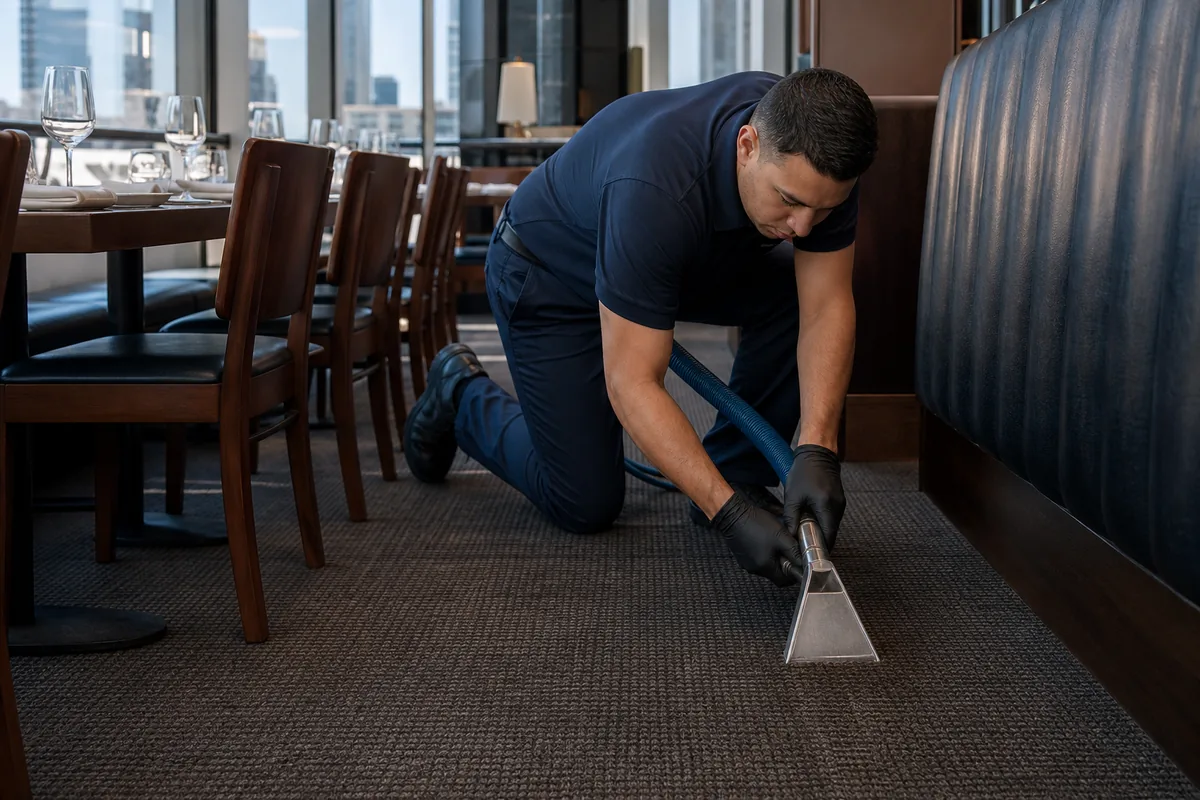
The walkthrough identifies host stands, waiting zones, table aisles, booth rows, bar-adjacent carpet, banquet rooms, and routes used by servers and carts. We note concentrated soil, chair abrasion, fixed bases, floor outlets, loose transitions, and boundaries with tile or kitchen flooring. Upholstered booths and dining chairs receive a separate material review because fabric, vinyl, leather, cushioning, and exposed wood or metal require different decisions. The restaurant confirms which areas are included and which remain restricted. This map prevents a dining-room project from drifting into kitchen floors, food-contact surfaces, ventilation systems, or furniture repair outside the cleaning job.
Inspect Food, Beverage, and Oily Residue
Coffee, wine, sauces, fryer-adjacent oils, dairy, and unknown older spills should not receive one universal treatment. Staff history can clarify what occurred and whether another product was already applied. Dry soil and grit are removed before moisture, then treatment choices are tested for the carpet or upholstery material. A dark aisle may combine recoverable residue with abrasion from chairs and footwear. Some stains remain when dye, fiber, finish, adhesive, or backing has permanently changed. Odor is traced to a source rather than covered with fragrance, and a source beneath accessible carpet or inside damaged cushioning may require separate evaluation or replacement.
Get a quote for your property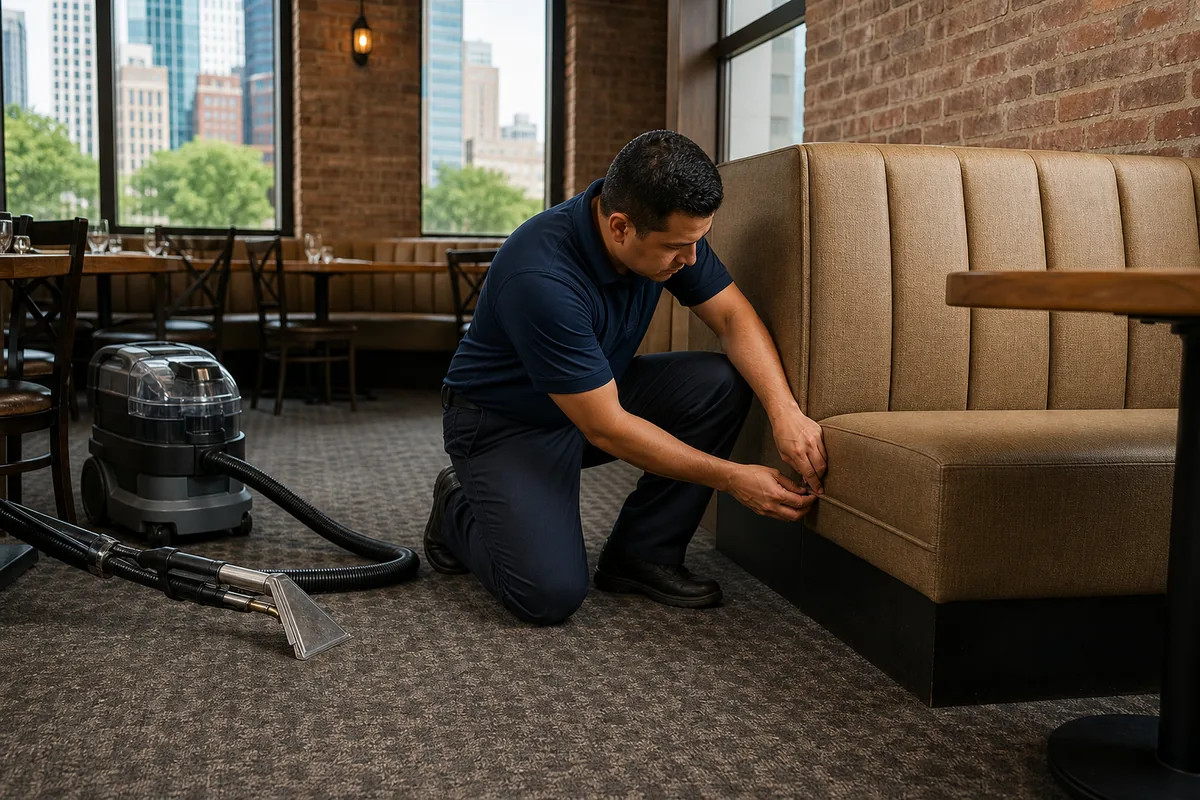
Clean Booths and Chairs by Material
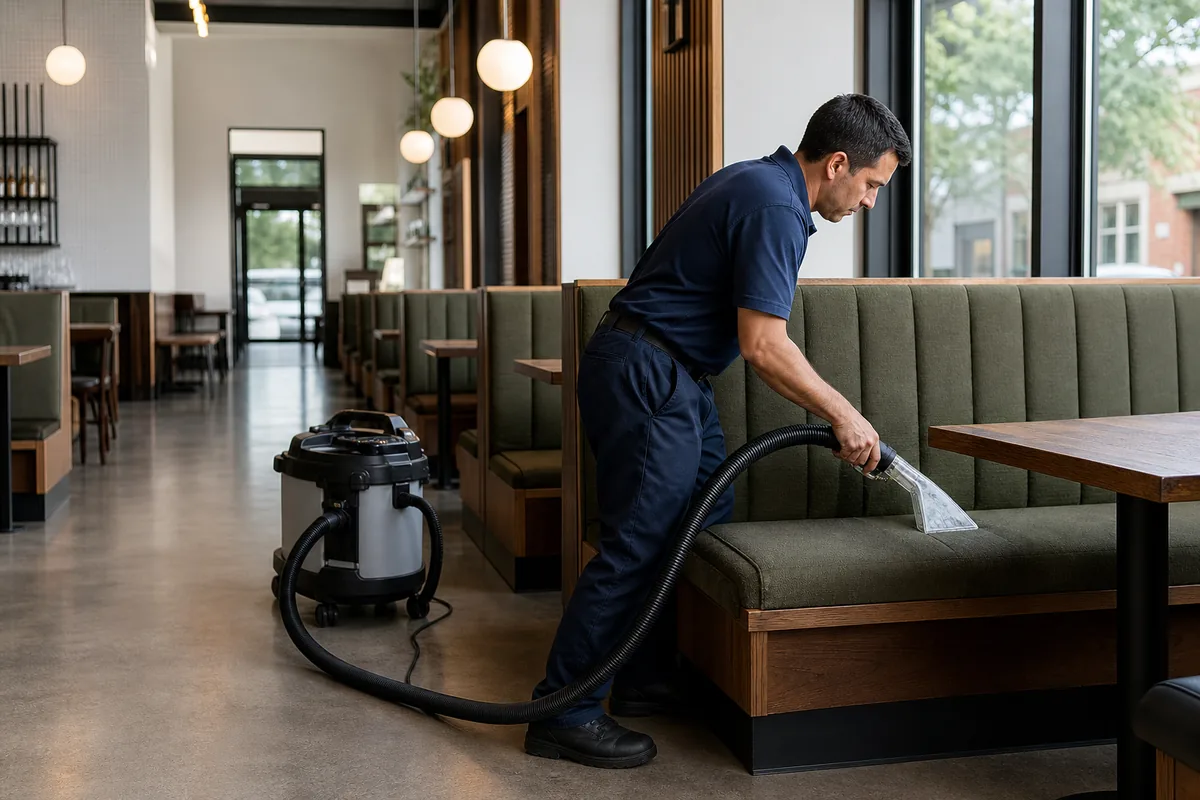
Booth backs, seat panels, chair cushions, seams, piping, and frame edges collect different soil. Before cleaning, we review care information, fiber or finish, color stability, existing cracks, worn coatings, loose seams, and cushion construction. Textile extraction is not automatically appropriate for leather, vinyl, velvet, or mixed-material furniture. Exposed wood and metal also affect how edges are handled. Dining sets are cleaned consistently across comparable panels when practical, while damaged or replacement-level pieces are documented. Upholstery work addresses accessible surface soil; it does not repair torn fabric, degraded foam, split vinyl, loose frames, failed finishes, or contamination inaccessible within a cushion.
Coordinate Cleaning With Restaurant Operations
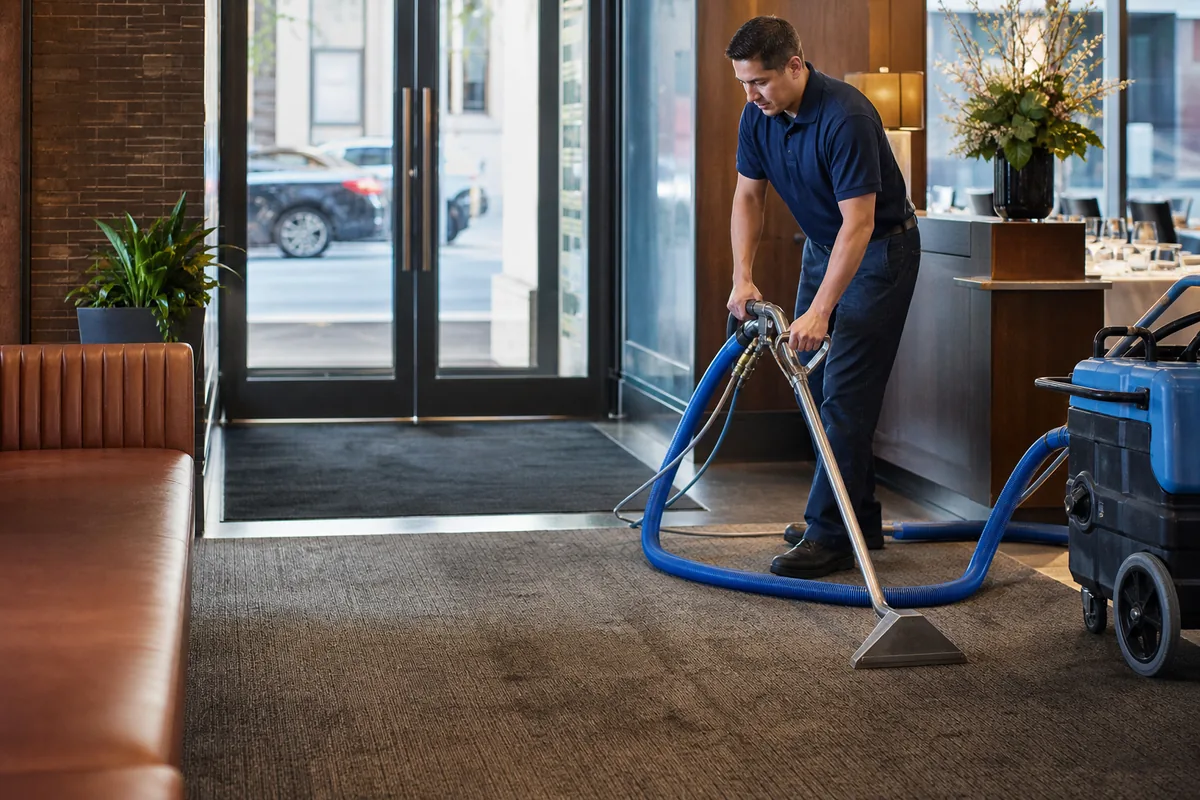
The restaurant selects a work period that accounts for deliveries, food preparation, service, private events, alarms, keys, and staff access. Tables and movable chairs require an agreed staging and reset plan; fixed booths, equipment, and heavy furnishings remain in place unless specifically addressed. Work zones include hoses, equipment, damp carpet, and upholstery cushions arranged for drying. The operator keeps food and clean service items separated and retains control of sanitation and reopening decisions. A realistic schedule includes setup, treatment, drying, inspection, and furniture replacement rather than counting only machine time. Different fabrics and carpet zones may dry at different rates.
Review Results and Recurring Trouble Areas
After drying, the restaurant can review remaining aisle wear, recurring food spots, loose carpet edges, damaged booth panels, and areas blocked by fixed bases. Consistent notes help distinguish entry or server lanes that need additional maintenance from quieter dining sections. Vacuuming, maintained entry mats, prompt spill reporting, and appropriate furniture care can reduce accumulation between deeper services. When a spot repeatedly returns, the record can support investigation of residues, backing, cushion material, or an ongoing source. Documentation describes appearance care and visible condition without promising stain removal, odor elimination, sanitation results, customer response, or compliance with food-service requirements.
Planning around your facility
Commercial cleaning questions
They can be coordinated, but each material needs its own inspection, treatment plan, access, drying, and condition notes. One carpet method should not be assumed suitable for seating.
Recoverable oils and soil may improve, but repeated traffic can also abrade fibers or alter dyes. Results depend on carpet construction, prior products, age, and the depth of residue.
The walkthrough should assign movement and staging responsibilities. Fixed booths, heavy bases, equipment, and sensitive furnishings are not treated as ordinary movable chairs.
No. Carpet and upholstery appearance cleaning is separate from food-contact sanitation, kitchen floor care, grease systems, pest control, and regulated restaurant procedures.
Request commercial cleaning
Tell us about your property and schedule.
Call us or fill out the form. We will contact you to discuss the areas you need cleaned and provide a quote.
Get My Quote