Commercial Carpet Care for Retail Spaces
Retail Carpet Cleaning in Hammond
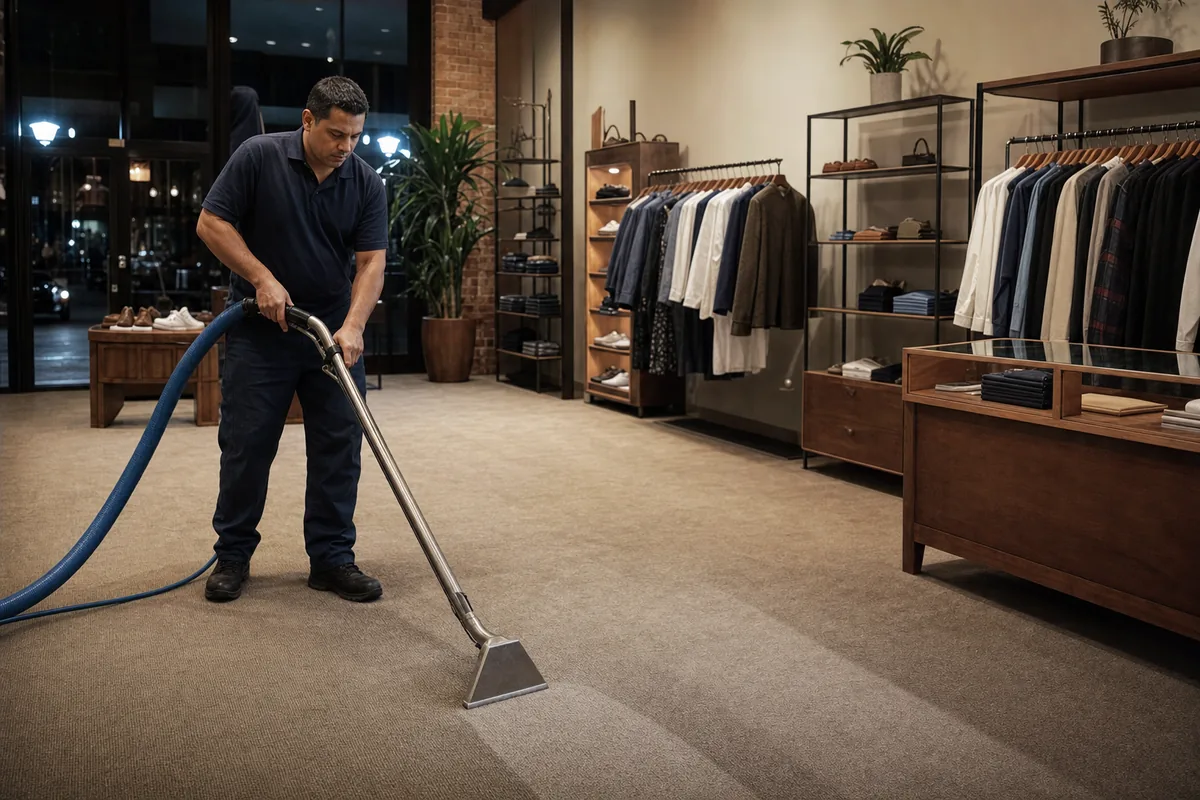
Need Retail Carpet Cleaning for Hammond Stores for a Hammond-area property? Tell us about the areas you need cleaned and the best time to reach you. Call us or fill out the form, and we will contact you to discuss the job and provide a quote.
Serving Hammond and Northwest Indiana homes, apartments, condos, and workplaces.
Get a quote
Get a commercial cleaning quote in Hammond
Choose a service and your city, then send your contact information. We will contact you to discuss the job and provide a quote.
Quote request received
Quick details
Tell us about your business
Tell us the property type, rooms, floors, and busiest areas.
Share your open hours and when the cleaning can be completed.
Tell us about loading, keys, elevators, parking, and security rules.
Map Entrances, Queues, and Customer Routes
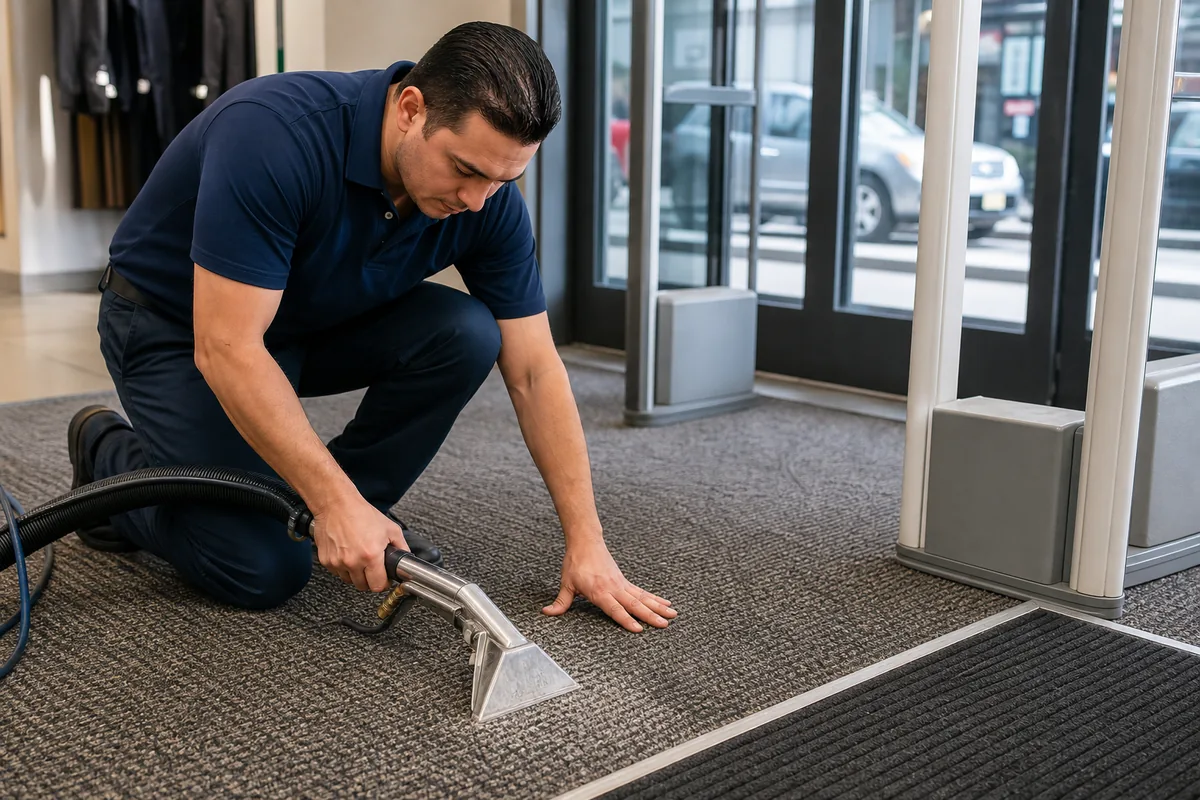
The walkthrough follows the customer path from entrance matting to feature displays, checkout queues, fitting rooms, service counters, and exits. We also note stockroom connections, cart routes, floor outlets, alarm pedestals, and boundaries with hard flooring. Comparing exposed lanes with protected carpet helps distinguish soil from abrasion or pile distortion. In a street-level Hammond store, winter grit may concentrate near the vestibule; an upper-floor shop may depend on service elevators and building check-in. A detailed map lets the retailer confirm included zones, preserve required routes, and separate carpet care from hard-floor, fixture, merchandise, or equipment work.
Plan Around Displays and Merchandise
Display tables, racks, mannequins, shelving, powered fixtures, and loaded cases are not all movable in the same way. The store assigns responsibility for merchandise and identifies fixtures that can be shifted, staged, or left in place. Staff should secure small products, cords, signage, and sensitive items before equipment enters the zone. We clean accessible carpet to agreed boundaries and document areas blocked by built-ins or heavy displays. This preparation protects inventory control and prevents improvised furniture decisions. It also gives visual-merchandising staff a clear reset sequence after drying without making the cleaning crew responsible for product placement, electrical connections, or fixture stability.
Get a quote for your property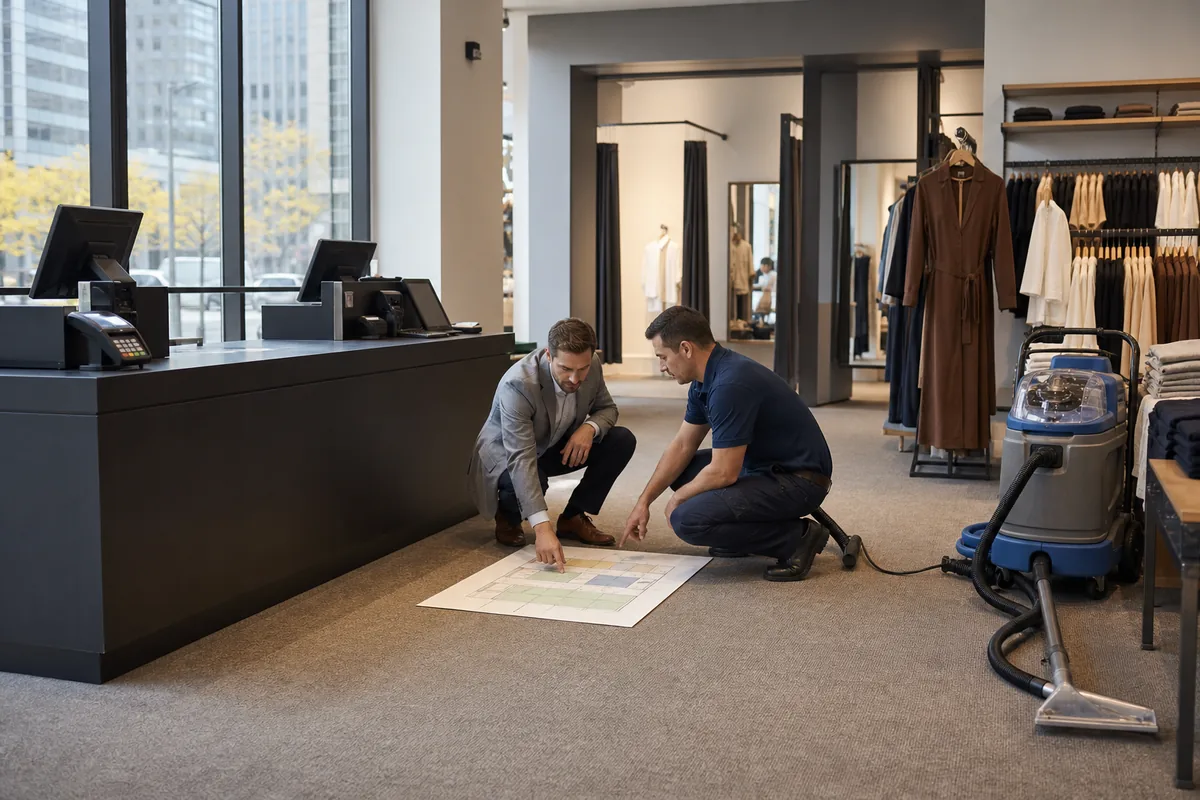
Treat Entry Soil and Store-Specific Spots
Tracked grit, deicer, beverages, cosmetics, gum, adhesive, and unknown residues require identification and testing. Dry soil removal comes before moisture, especially around entry mat edges and display bases. Staff information about a spill or previous product can improve the assessment. Gum and adhesive may leave a changed texture or color even after accessible residue is reduced. Dye transfer, bleaching, abrasion, and backing damage are not ordinary soil. We avoid promising that every checkout lane or spot will disappear. The objective is to improve recoverable buildup while recording permanent changes and referring damaged carpet, active moisture, or unsafe transitions to the appropriate party.
Phase the Sales Floor by Zone
Retail operations may require a checkout, entrance, or service counter to remain accessible while another zone is cleaned. The store contact defines customer and employee routes, keys, alarms, loading access, mall or building rules, and the areas that cannot close together. Equipment, hoses, damp carpet, and staged fixtures remain inside the approved zone. A sequence includes setup, cleaning, drying, inspection, and merchandise reset rather than ending when machine work stops. The retailer controls public access and decides when each section reopens under its procedures. Drying varies with carpet construction, ventilation, humidity, treatment intensity, and fixture density.
Document Wear and Maintenance Priorities
Post-drying notes can identify remaining checkout wear, recurring beverage spots, damaged transitions, adhesive marks, and carpet inaccessible beneath permanent displays. Comparing records over time helps managers see which entrances or queues accumulate soil faster than fitting rooms or low-use corners. Consistent vacuuming, entry-mat care, and prompt spot reporting can reduce buildup between deeper services. Multi-location retailers may benefit from common zone names and photo standards while still allowing each store's traffic and carpet to guide decisions. Records document appearance maintenance; they do not guarantee customer impressions, sales outcomes, stain removal, regulatory compliance, or a universal cleaning schedule across every location.
Planning around your facility
Commercial cleaning questions
No universal rule applies. The walkthrough should identify movable fixtures, built-ins, powered displays, and inventory responsibilities so accessible boundaries and reset steps are clear.
A retailer may phase other zones while preserving an approved checkout route when the layout, equipment path, drying area, staffing, and building rules support it.
Some residue can improve, but age, prior products, carpet fiber, dyes, backing, and physical damage affect the result. Texture or discoloration may remain.
Use consistent room and zone names, condition photographs, access notes, and service records, while allowing each store's traffic, carpet, fixtures, and building rules to shape its work.
Request commercial cleaning
Tell us about your property and schedule.
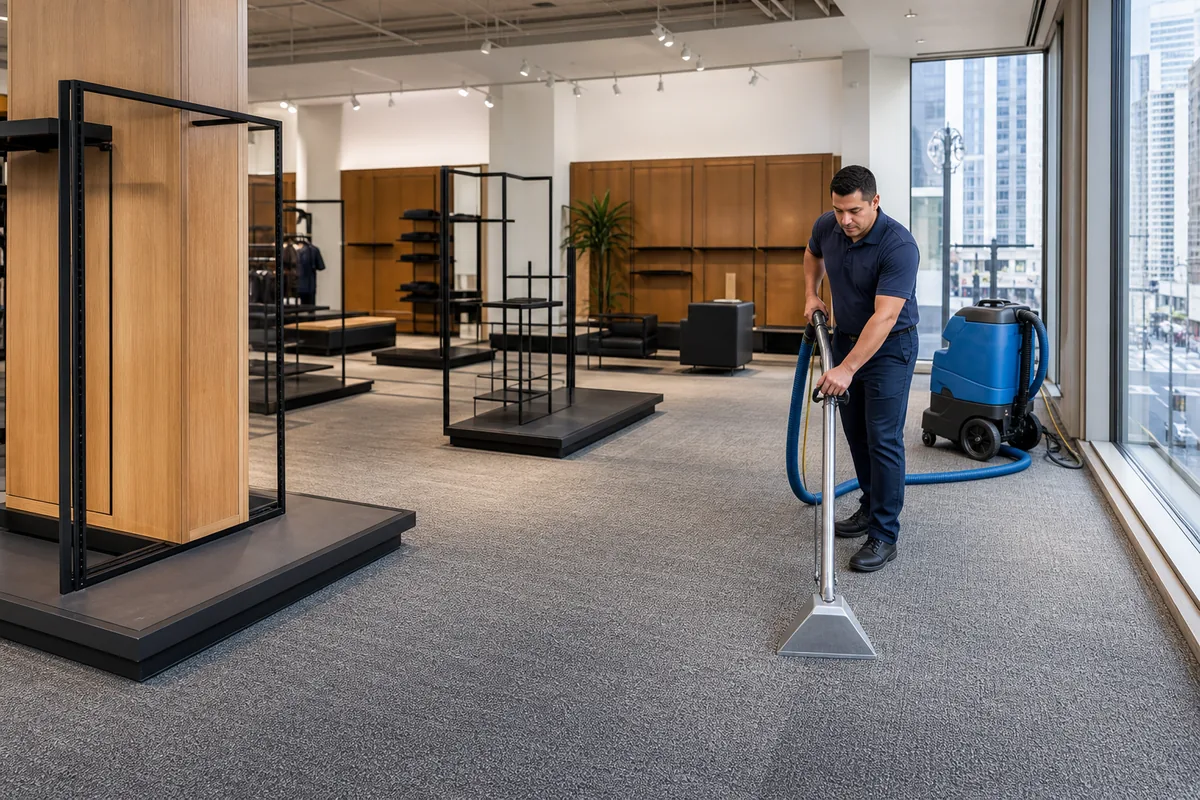
Call us or fill out the form. We will contact you to discuss the areas you need cleaned and provide a quote.
Get My Quote