Focused Care for Favorite Seats
Chair and Recliner Cleaning in Hammond
Looking for upholstery cleaning for chairs and recliners in Hammond or Northwest Indiana? Tell us what you need cleaned. Call us or fill out the form, and we will contact you to discuss the job and provide a quote.
Serving Hammond and Northwest Indiana homes, apartments, condos, and workplaces.
Get a quote
Get a upholstery cleaning quote in Hammond
Choose a service and your city, then send your contact information. We will contact you to discuss the job and provide a quote.
Quote request received
Quick details
What to tell us
Tell us which rooms, furniture, rugs, or floors need service.
Point out spots, odors, heavy traffic, pet concerns, or past cleaning products.
Share your Northwest Indiana city, ZIP code, stairs, parking, and entry details.
Examine High-Contact Areas and Existing Wear
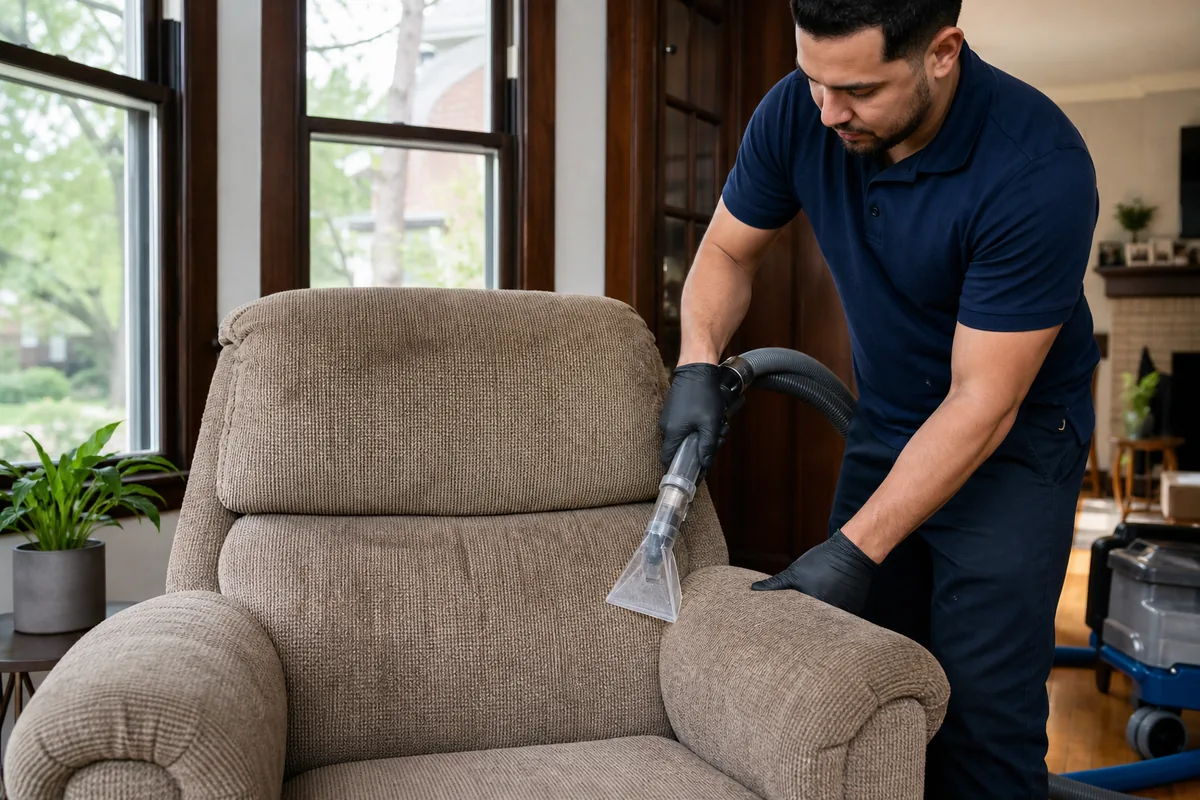
The favorite chair often shows a distinct use pattern. We compare the headrest, arms, seat, footrest, side panels, and less-used back to separate accumulated soil from permanent wear. Pilling, shiny abrasion, thinning fabric, cracking coatings, and stretched seams will not be corrected by cleaning. Prior spot products may also leave pale rings or sticky residue. The inspection records these conditions before moisture is introduced. This allows targeted attention to the panels that need it without overworking fragile areas simply to make every surface appear identical. The likely result is discussed in terms of improvement, not a promise that a heavily used chair will look new.
Protect Controls, Motors, and Moving Parts
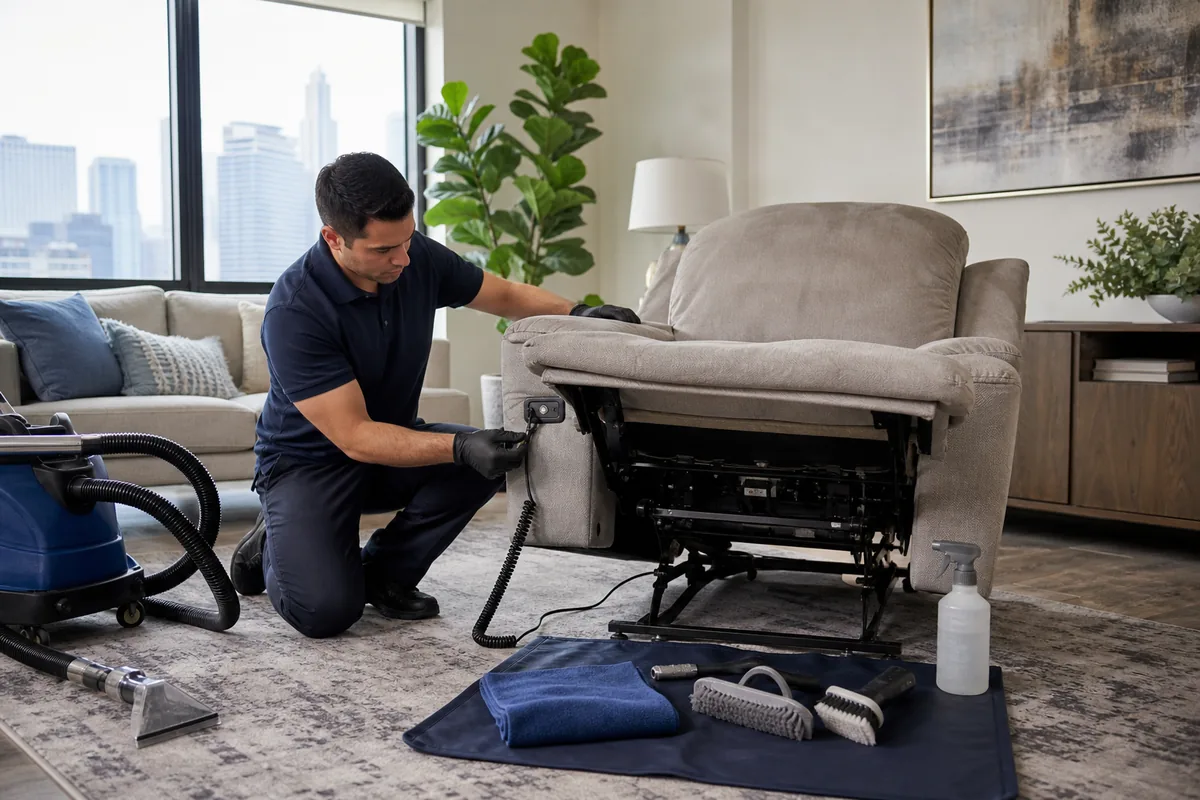
Manual levers, electrical controls, charging ports, cables, massage components, and exposed hinges should be identified before work starts. The chair is unplugged or positioned according to its manufacturer information and the agreed process, without forcing the mechanism into an unstable position. Moisture is controlled around openings and hardware. Upholstery cleaning does not include mechanical or electrical repair, and a chair with damaged wiring, an unstable base, or a malfunctioning lift component may need appropriate service before cleaning proceeds. In compact Hammond rooms, the technician also needs enough clearance to reach the back and sides without scraping walls or nearby furniture.
Get a quote for this service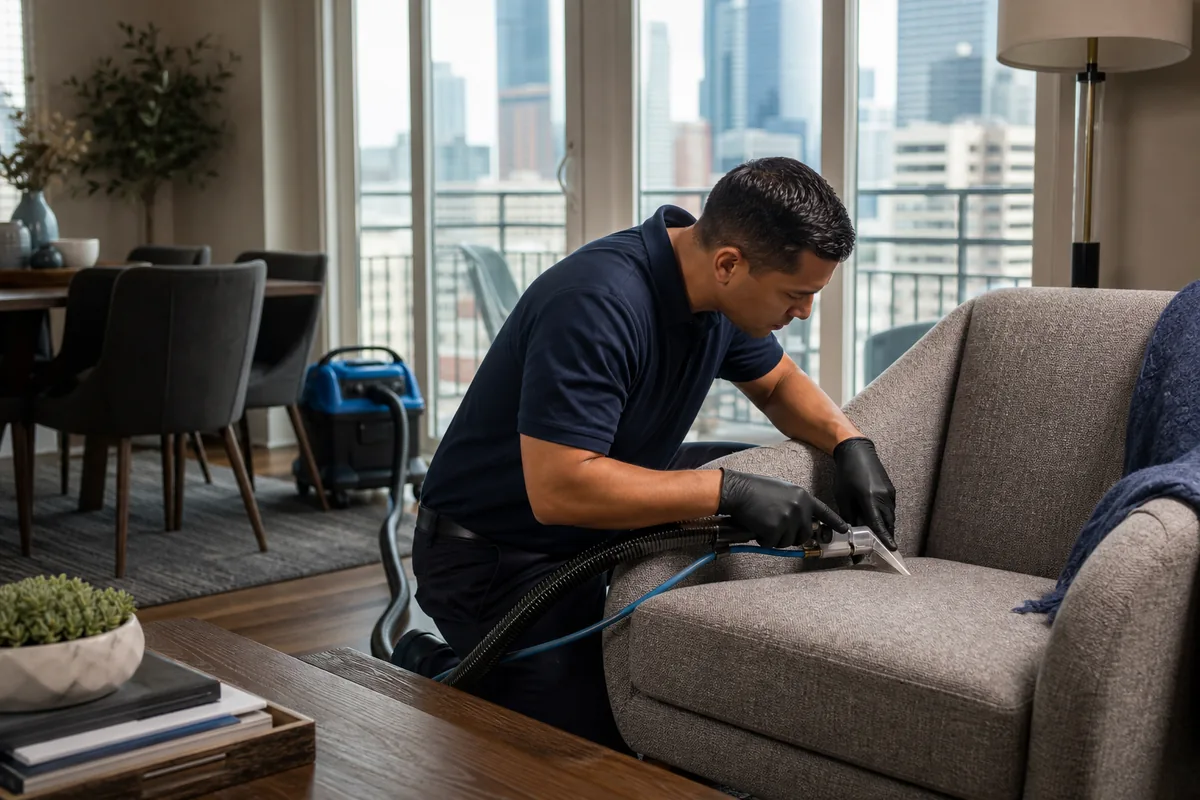
Use Fabric and Construction to Guide Treatment
Two chairs that look similar can contain different fibers, backing, dyes, padding, and trim. The care label and manufacturer guidance are reviewed when available, followed by a limited test in a discreet area. Tufting, decorative nails, wood arms, contrasting piping, and glued components can affect moisture and tool choices. Recliner footrests may also contain multiple layers that dry at different rates. We choose a process for the actual piece rather than assuming all fabric seating accepts hot-water extraction. If testing suggests unstable color, texture change, or another material risk, the work should be adjusted before broad treatment begins.
Detail Seams, Crevices, and Footrests
Dry removal comes first in folds, seat gaps, under loose cushions, and around the footrest where crumbs and hair collect. Soil trapped in a seam should be loosened carefully rather than driven deeper with excess liquid. High-contact panels may receive repeated light treatment, with attention to avoiding rings or uneven saturation. Attached cushions and tight backs limit access to internal areas, so the service covers reachable upholstery rather than dismantling the chair. Pet hair woven into damaged fabric can remain even after detailed grooming. This methodical sequence prioritizes even cleaning and clear limits over aggressive work that could stress stitching or backing.
Position the Chair for Drying and Normal Use
After cleaning, a recliner may need to remain open or partially extended when stable so the footrest and seat edges receive airflow. The correct position depends on its design and manufacturer guidance. Fans and room ventilation can support drying, but fabric, padding, humidity, and treatment intensity determine the actual pace. Keep people, pets, blankets, and fitted covers away until the upholstery is ready. Controls and motors should be used only as directed for the piece and cleaning setup. Once dry, review high-contact areas in normal light; remaining shine or color difference may be abrasion or dye change rather than soil left behind.
Questions before you schedule
Common questions
Some can, after inspection and appropriate preparation. Electrical components, damaged wiring, manufacturer restrictions, and access may limit the process or require mechanical service first.
Body-oil residue may improve while abrasion, dye change, or prior chemical effects remain. Testing and comparison with a protected area help explain the difference.
The service reaches accessible folds and gaps without dismantling the chair. Fully enclosed internal areas and components behind fixed upholstery are outside ordinary surface cleaning.
Leather requires identification of its finish and a leather-appropriate plan. It should not automatically receive the method selected for woven fabric upholstery.
Ready for a quote?
Tell us what you need cleaned.
Call us or fill out the form. We will contact you to discuss the job, answer your questions, and provide a quote.
Get My Quote