Furniture Care for Pet Households
Upholstery Cleaning for Pet-Used Furniture in Hammond
Looking for furniture cleaning for homes where pets share the sofa in Hammond or Northwest Indiana? Tell us what you need cleaned. Call us or fill out the form, and we will contact you to discuss the job and provide a quote.
Serving Hammond and Northwest Indiana homes, apartments, condos, and workplaces.
Get a quote
Get a upholstery cleaning quote in Hammond
Choose a service and your city, then send your contact information. We will contact you to discuss the job and provide a quote.
Quote request received
Quick details
What to tell us
Tell us which rooms, furniture, rugs, or floors need service.
Point out spots, odors, heavy traffic, pet concerns, or past cleaning products.
Share your Northwest Indiana city, ZIP code, stairs, parking, and entry details.
Follow the Pet's Actual Furniture Routine
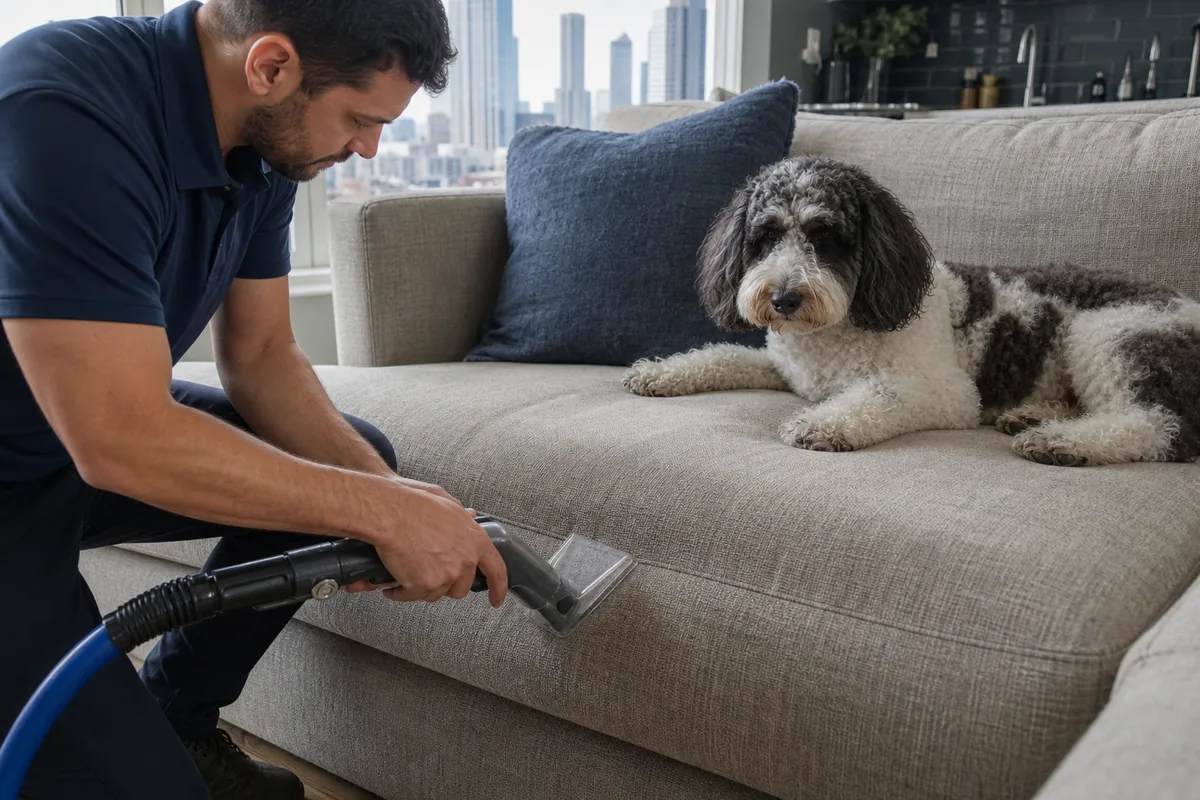
We ask which cushions the pet uses, whether it sleeps against a particular arm, and where accidents or food spills have occurred. Protected cushion undersides provide a useful comparison with exposed seating. Cats may leave hair and body oils along back cushions and corners, while dogs can transfer outdoor soil to seat edges and footrests. A general whole-sofa odor product is not a substitute for locating a source. Mapping the routine directs dry removal and treatment to likely areas while avoiding unnecessary applications elsewhere. It also helps determine whether nearby carpet, rugs, throws, or pet bedding should be considered separately.
Remove Hair Before Introducing Moisture
Pet hair can weave into upholstery, settle beneath removable cushions, and gather around piping, buttons, reclining mechanisms, and the deck under seats. Detailed vacuuming and suitable dry grooming come before wet treatment. Homeowners can remove washable blankets, toys, and loose pet beds according to their own care labels. Hair embedded in damaged weave or trapped inside enclosed furniture may remain. Excess moisture does not solve a dry-hair problem and can turn fine debris into residue. A patient dry stage reveals the underlying fabric more clearly and allows spots, wear, and texture change to be evaluated before further cleaning decisions are made.
Get a quote for this service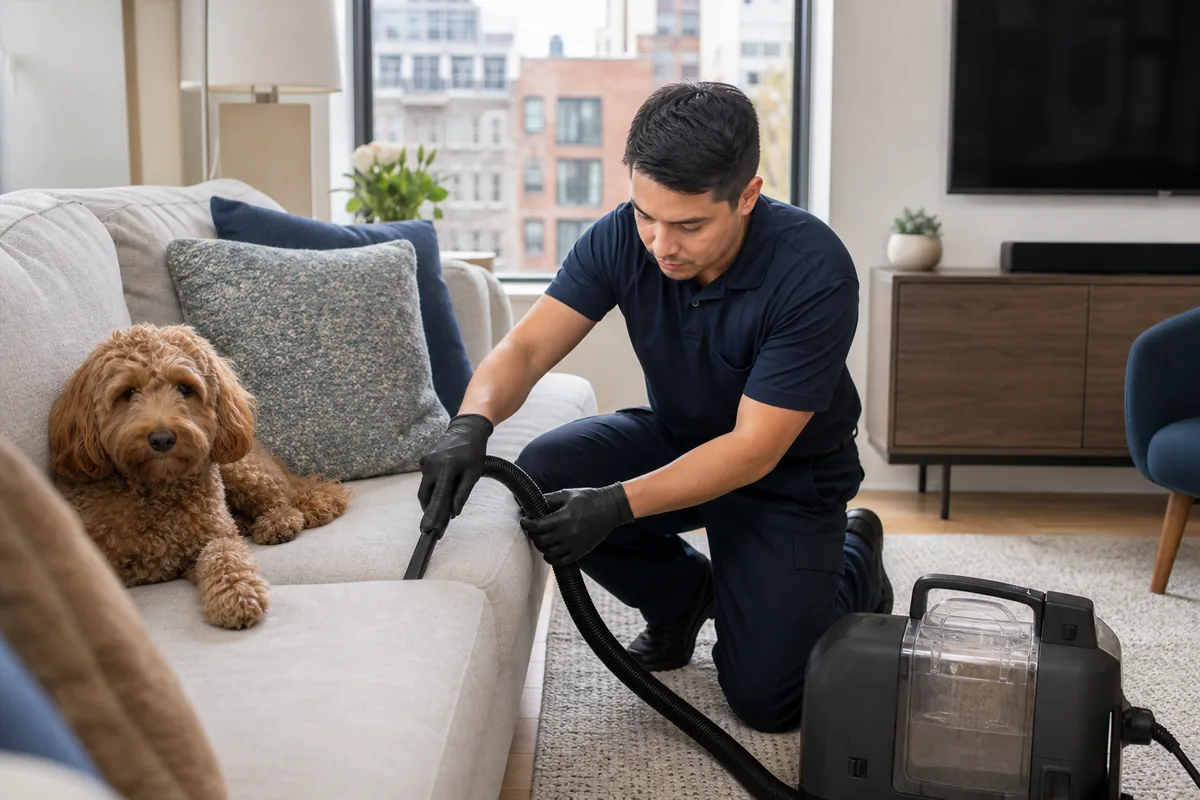
Locate Odor and Understand Depth
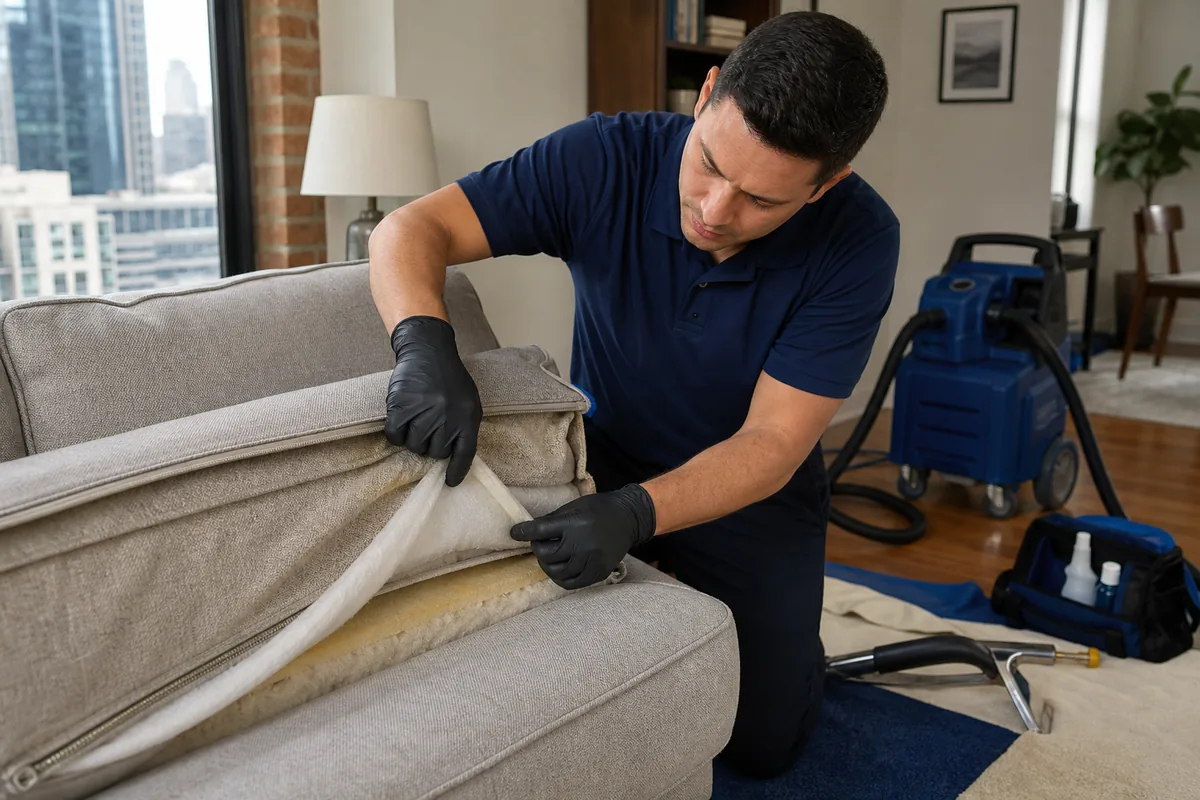
An odor may come from surface residue, cushion cover, foam, batting, platform cloth, wood frame, carpet beneath the furniture, or another room source. Urine can spread wider inside absorbent fill than the visible mark suggests. We inspect and discuss what parts are accessible without dismantling the furniture. Surface treatment may address a limited incident, while saturated cushion fill or frame material may require replacement or specialist work. No responsible upholstery plan should guarantee complete odor removal before source and depth are known. Fragrance can temporarily mask an odor but is not evidence that the underlying material has been removed.
Match Treatment to Both Spill and Fabric
Pet saliva, food, muddy paws, vomit, and urine differ, and microfiber, velvet, cotton, leather, and synthetic blends also respond differently. The care label and discreet testing guide treatment. Products previously sprayed by the household may add residue, rings, or dye change that complicate the result. We address each spot within the context of the surrounding panel rather than scrubbing one small circle aggressively. Some discoloration remains because fibers or dyes have changed. Leather and delicate pile fabrics receive their own material-specific decisions; they should not automatically use the process selected for ordinary woven upholstery.
Plan Pet Containment, Drying, and Ongoing Care
Pets need a secure place away from equipment, open doors, hoses, cushions, and damp furniture. In an apartment, that may require a closed room, crate routine, or time outside the home that suits the animal. Cushions are spaced for airflow and should not be returned tightly against one another while damp. Drying depends on fabric, fill, humidity, ventilation, and treatment intensity. Afterward, washable throws, routine dry hair removal, and prompt blotting can reduce buildup. These habits do not prevent every stain or odor, but they limit repeated household product use and make future conditions easier to identify accurately.
Questions before you schedule
Common questions
It may address odor when the source is accessible. Material in cushion fill, the frame, decking, or nearby flooring may require replacement or additional work.
Detailed dry removal can collect substantial accessible hair. Hair woven into damaged fabric or trapped inside enclosed construction may remain.
No furniture-cleaning service should be presented as whole-home pest control. An active infestation calls for veterinary and licensed pest-control guidance alongside cleaning.
No. Pulled threads, scratches, punctures, and torn seams are physical damage. Cleaning can remove surrounding soil but does not reconstruct the material.
Ready for a quote?
Tell us what you need cleaned.
Call us or fill out the form. We will contact you to discuss the job, answer your questions, and provide a quote.
Get My Quote