A Careful First Step for Wet Carpet
Water Extraction for Wet Carpet in Hammond
Looking for water extraction for wet carpet in hammond in Hammond or Northwest Indiana? Tell us what you need cleaned. Call us or fill out the form, and we will contact you to discuss the job and provide a quote.
Serving Hammond and Northwest Indiana homes, apartments, condos, and workplaces.
Get a quote
Get a carpet and upholstery cleaning quote in Hammond
Choose a service and your city, then send your contact information. We will contact you to discuss the job and provide a quote.
Quote request received
Quick details
What to tell us
Tell us which rooms, furniture, rugs, or floors need service.
Point out spots, odors, heavy traffic, pet concerns, or past cleaning products.
Share your Northwest Indiana city, ZIP code, stairs, parking, and entry details.
Stop the Source and Address Immediate Hazards
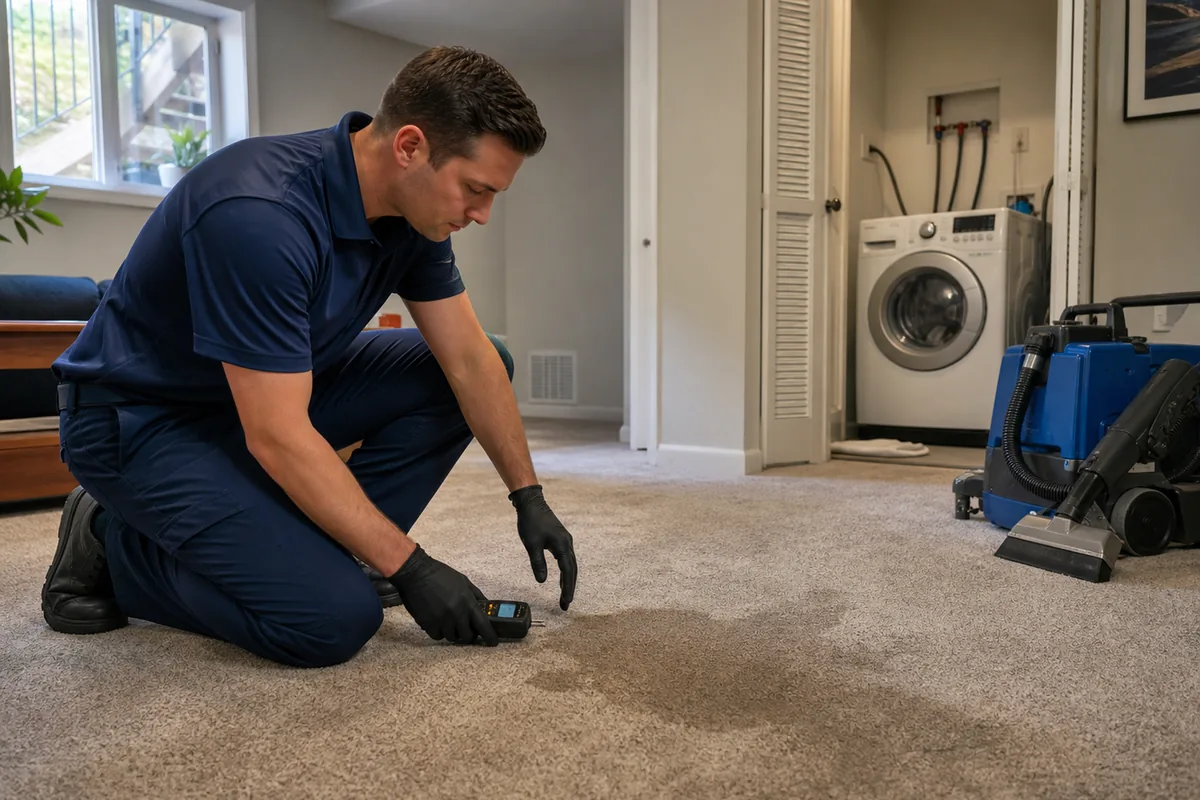
Before anyone walks equipment into the area, the water source should be stopped when it can be done safely. A plumber, building engineer, appliance technician, roofer, or property manager may need to act first. Stay out of water near electrical outlets, appliances, energized equipment, sagging ceilings, or unstable materials, and follow emergency guidance when there is an active hazard. Do not assume water is sanitary because it appears clear. Drain backups, toilet overflows, exterior flooding, long-standing moisture, and unknown sources can require specialized remediation and protective procedures beyond ordinary carpet cleaning. Accurate source history is one of the most important details to provide when calling.
Map Every Material the Water Reached
The visible wet patch is only the starting point. Water can move laterally through pad, along seams, under baseboards, into closets, and across transitions to wood, laminate, drywall, or neighboring units. In Northwest Indiana condos and apartments, it may also travel between floors or through shared assemblies. We ask when the event began, whether the source is fully stopped, which rooms are affected, and what materials border the area. Moisture readings and physical inspection may be needed to determine a practical extraction work. Items such as saturated padding, damaged flooring, wet drywall, cabinetry, insulation, and contents may require removal or evaluation by an appropriate restoration contractor.
Get a quote for this service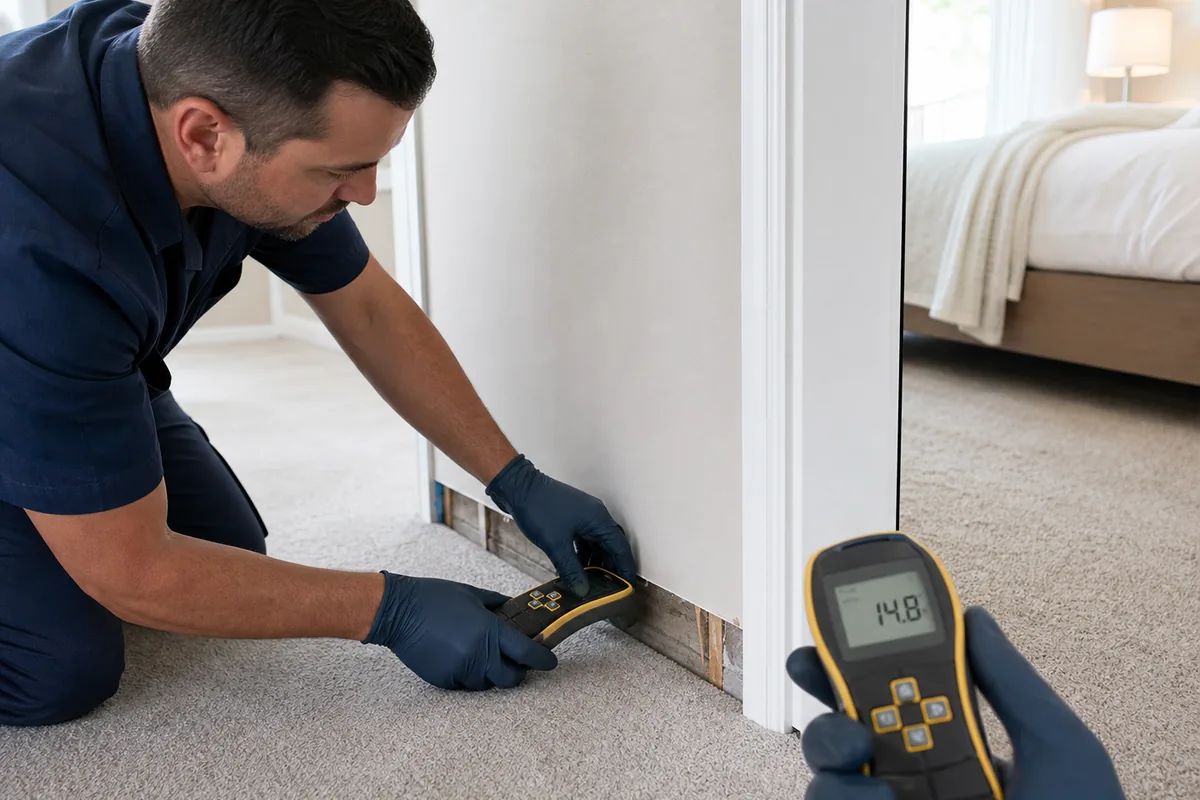
Match Extraction to Water Category and Carpet Condition
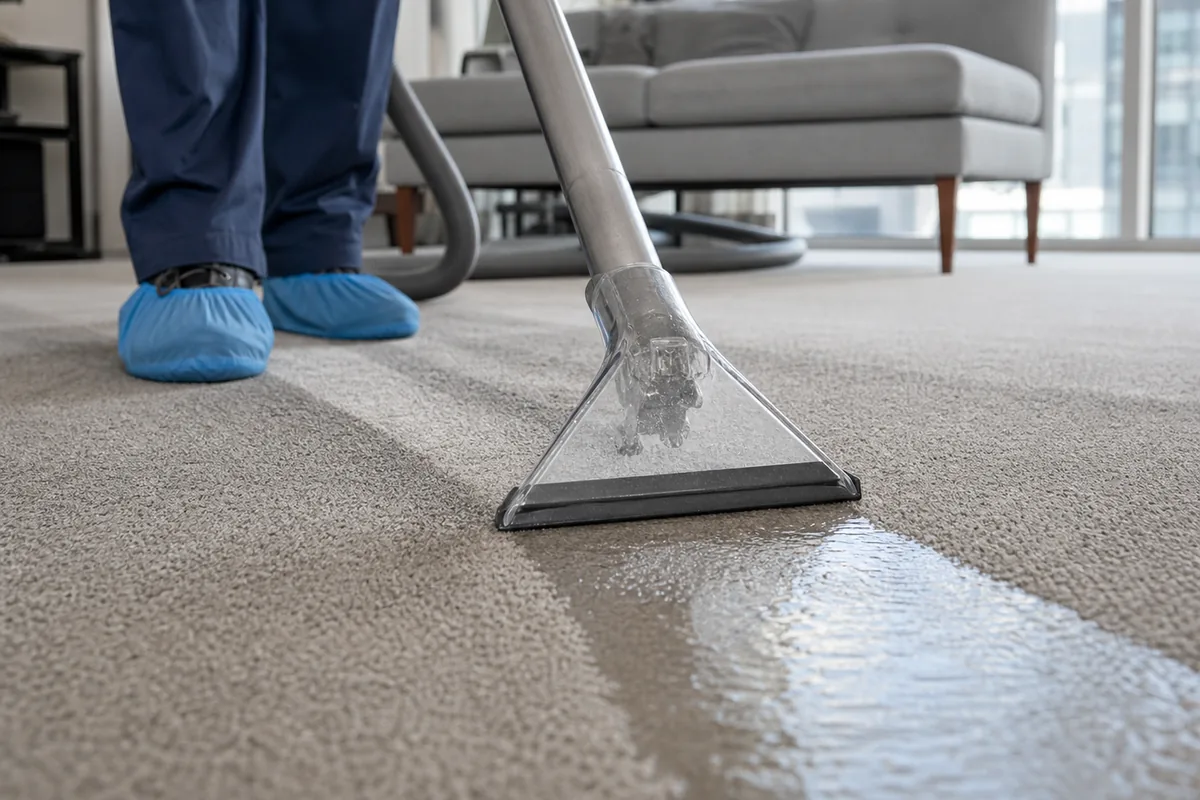
Extraction is not permission to treat every wet carpet as salvageable. The source, elapsed time, temperature, material condition, odor, visible soil, and building environment all matter. Clean-water events addressed promptly may allow controlled extraction and drying assessment when the carpet and surrounding materials remain suitable. Water with sewage, chemicals, outdoor contaminants, or an uncertain history calls for a different response. Delaminated carpet, deteriorated backing, stained pad, weakened seams, and damaged tack strips also change the options. We explain these limits before work so the visit does not imply that removing visible water resolves contamination or structural moisture.
Coordinate Extraction, Air Movement, and Follow-Up Checks
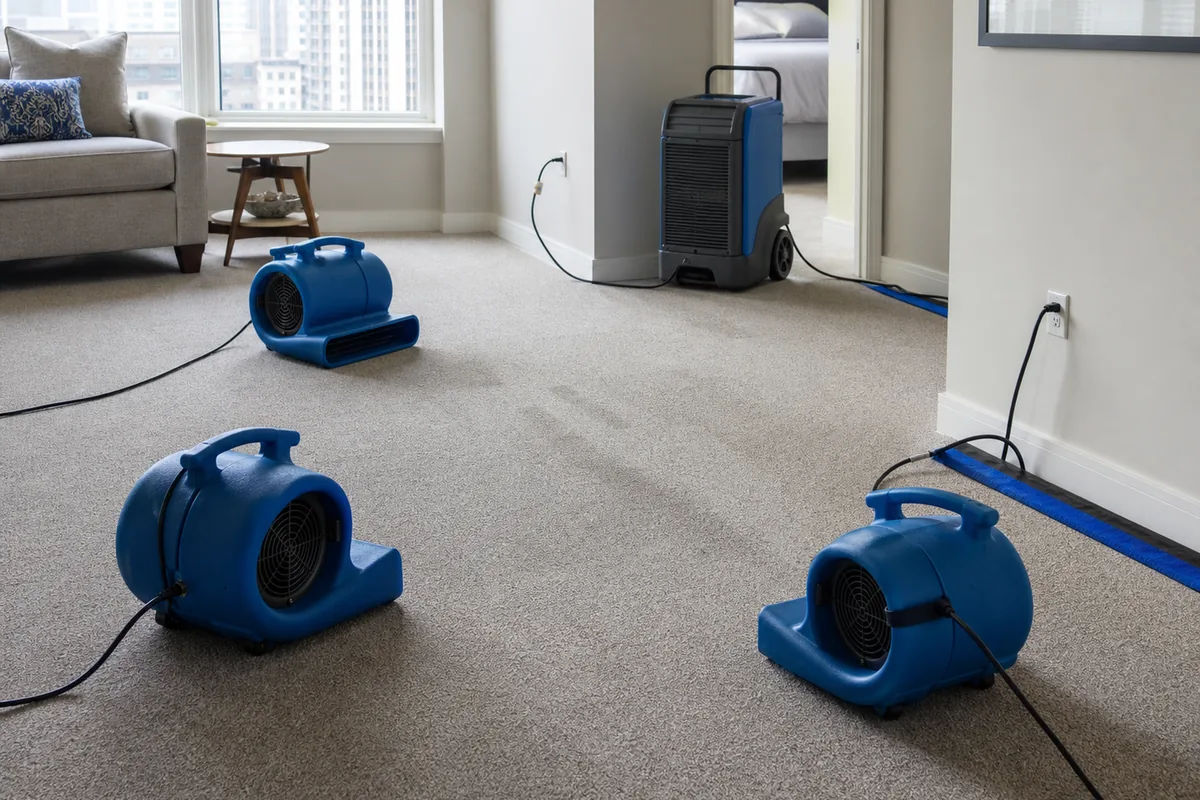
Removing accessible water is one stage of a drying plan, not proof of completion. Air movement, dehumidification, temperature control, material exposure, and follow-up measurement may be needed. Equipment placement must account for doors, electrical capacity, pets, children, occupants, and paths that must remain open. A high-rise unit may have building rules for noise, elevators, discharge, and overnight equipment, while a basement may have limited airflow and ongoing seepage risk. If a restoration company is coordinating structural drying, carpet work should fit that plan. The responsible next step is based on measured conditions and affected materials, not a universal number of hours.
Document the Event and Reduce the Chance of Repeat Damage
Photograph the source area, affected rooms, visible boundaries, damaged contents, and access constraints before items are moved when it is safe to do so. Keep records from the plumber, building management, appliance service, extraction provider, and any restoration or repair contractor. These materials help different trades understand what has already been addressed, although they do not determine insurance coverage or responsibility. After drying is confirmed by the appropriate provider, correct the cause before replacing pad, reinstalling flooring, closing walls, or returning absorbent contents. Maintenance on supply lines, drains, roofs, windows, foundation seepage, and appliance connections is outside carpet cleaning but essential to preventing recurrence.
Questions before you schedule
Common questions
Act promptly, but begin with safety and source control. The correct response depends on water source, elapsed time, materials affected, electrical conditions, and whether specialized remediation is required.
No. Salvage depends on the water source, contamination risk, time, carpet and pad condition, surrounding materials, and whether the assembly can be safely dried. Some situations require disposal and restoration work.
No. Extraction removes accessible liquid. Structural drying may require material removal, air movement, dehumidification, measurement, and ongoing oversight by a qualified restoration provider.
Describe the water source, when it began, whether it is stopped, rooms and materials affected, approximate size, odor or visible contamination, electrical concerns, floor level, building rules, and any work already completed.
Ready for a quote?
Tell us what you need cleaned.
Call us or fill out the form. We will contact you to discuss the job, answer your questions, and provide a quote.
Get My Quote